GNZ Newsletter December 2025

From the president
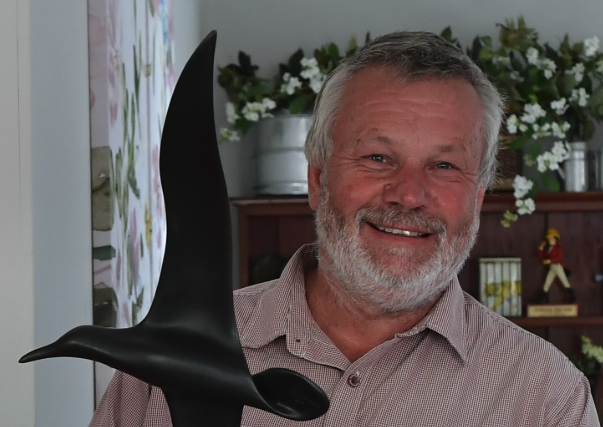
Welcome to December
Last month I was reporting on the first 1,000km flights for the season.
This month it is a new world record!
What a start to the season.
Congratulations Dane Dickenson.
Zipping around a 100km FAI triangle in just 23 minutes for a speed of 258km/hr.
We're also well into our events for the year with the CP contest, South Island Regionals and MSC Task week already ticked off the list.
A mixed bag of weather, but it was Spring.
Summer is now here though.
What weather will summer bring?
What amazing flights are in store for those with cunning plans?
I can't wait to find out.
Cheers
Nigel Davy
GNZ President
Congratulations
DANE DICKENSON
New world record!
Speed over a triangular course of 100km - 258km/hr!
(see more details in the article further below)

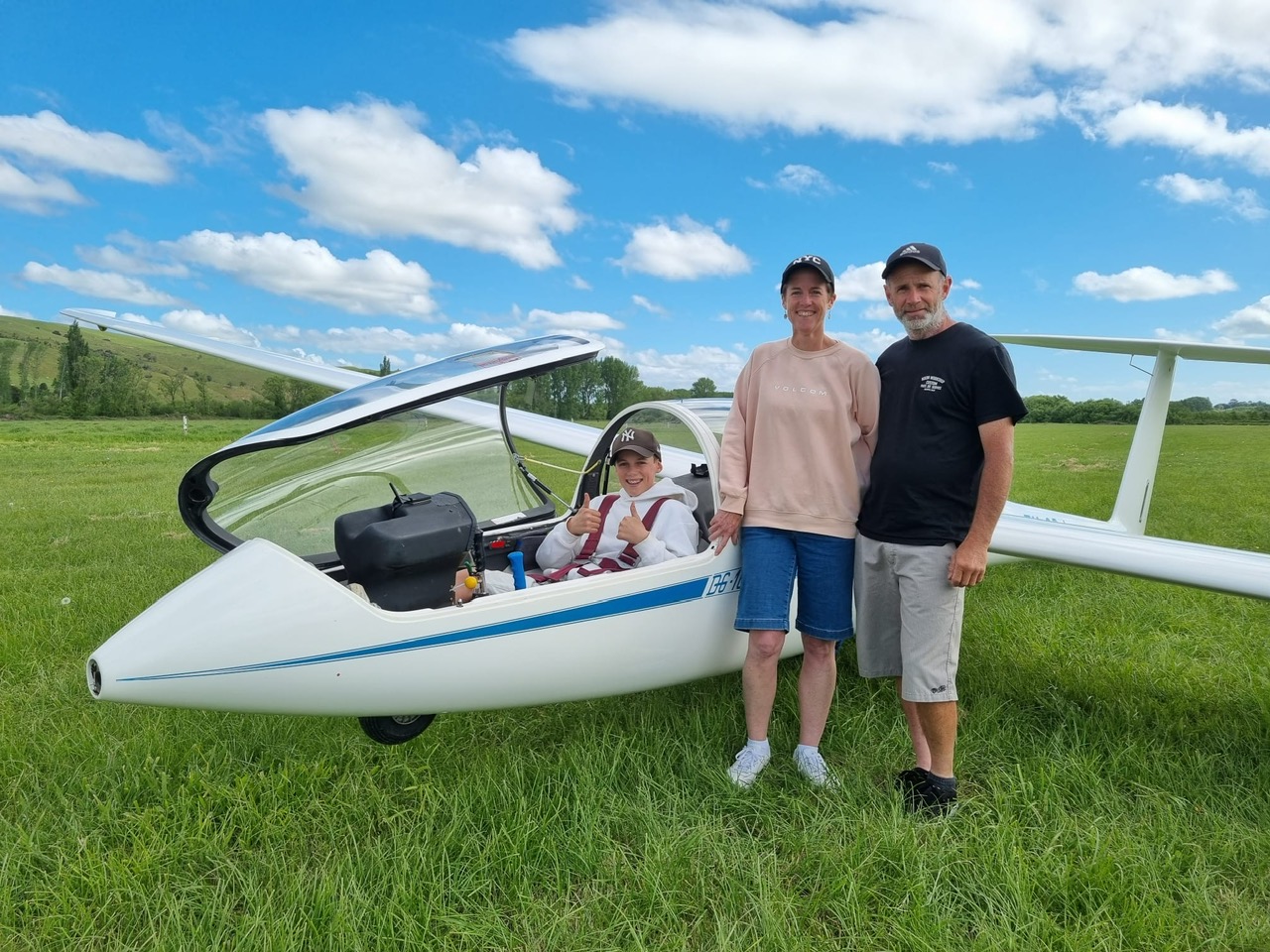
LUCA HAYMAN
First solo age 14 years. Pictured with Mum & Dad, Suz and Tony.
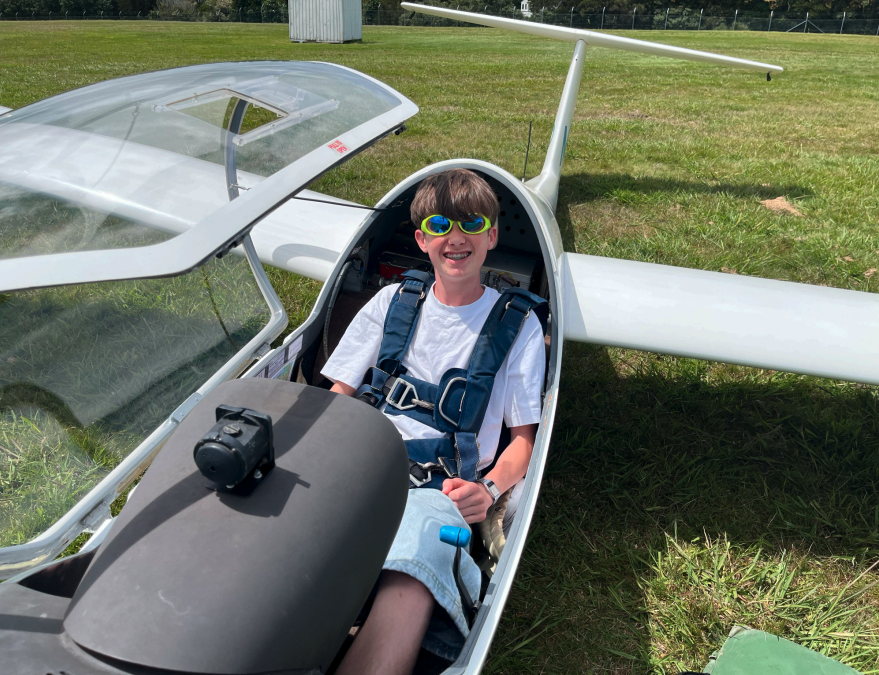
ANTON SHIPOV
First solo. Well done Anton!
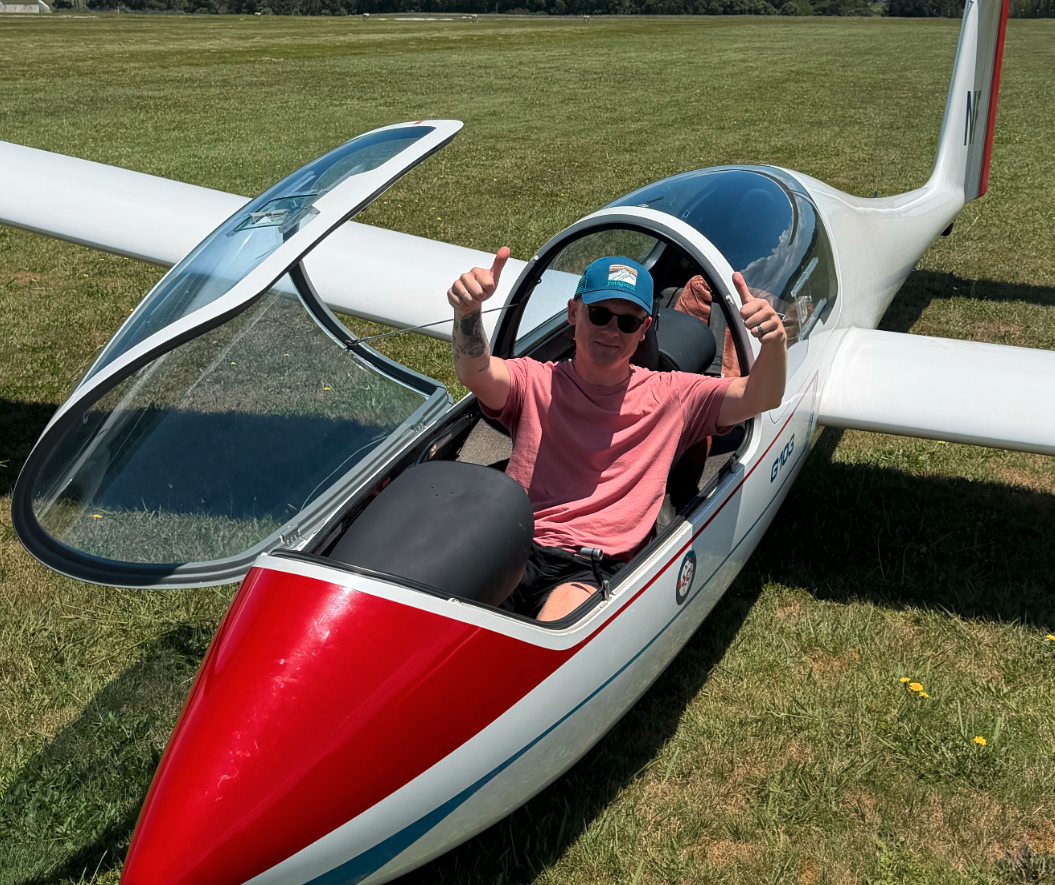
EMERSON YEOMAN
G102 rating just in time for summer!
KINSHUK CHHABRA
New tow pilot rating.
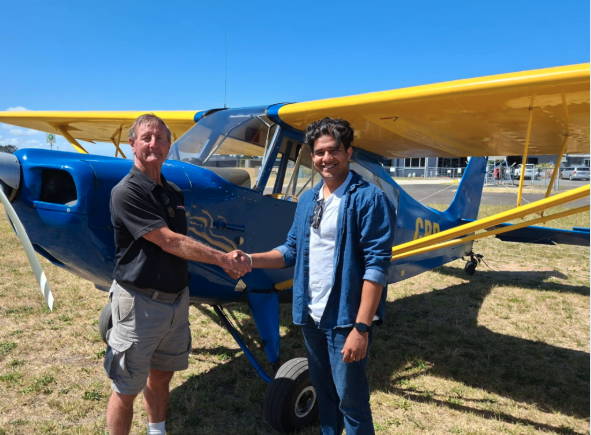
TERRY JONES
Winner of the Racing Class at the South Island Regionals

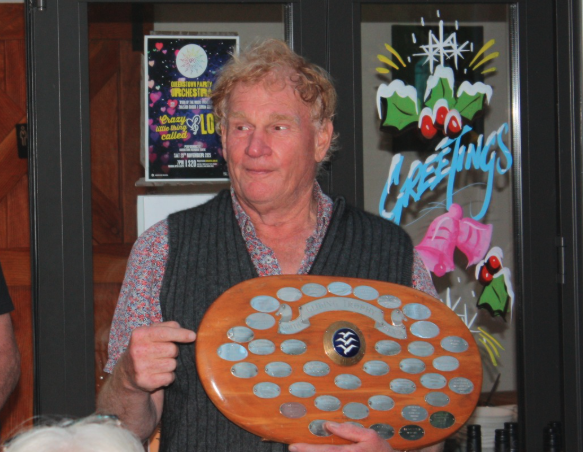
DEREK KRAAK
Winner of the Open Class, South Island Regionals
New World Record
Dane Dickenson’s Blistering 100 km FAI Triangle in Omarama
New Zealand gliding is once again on the world stage with an extraordinary flight by Dane Dickenson, who has just scorched around a 100 km FAI triangle at an incredible 258 km/h, valid for the D15G category. Flying his Ventus 2, Alpha 8 in the legendary Ben Ohau wave out of Omarama, Dane delivered a performance that may establish a new World Record.
According to Dane, the wave was “absolutely pumping,” providing immense, consistent lift that allowed him to maintain extraordinary cruise speeds.
“I just couldn’t fly fast enough — the lift was that strong, and the turnpoints lined up perfectly with the wave structure,” Dane said after landing.
The flight has been formally notified to the FAI (Fédération Aéronautique Internationale), and the validation process is currently underway. Dane is now compiling all required documentation, with G Dale, who observed the flight, assisting with the paperwork and verification.
Dane just about to exit Alpha 8 after achieving the World record speed around an FAI 100km triangle.

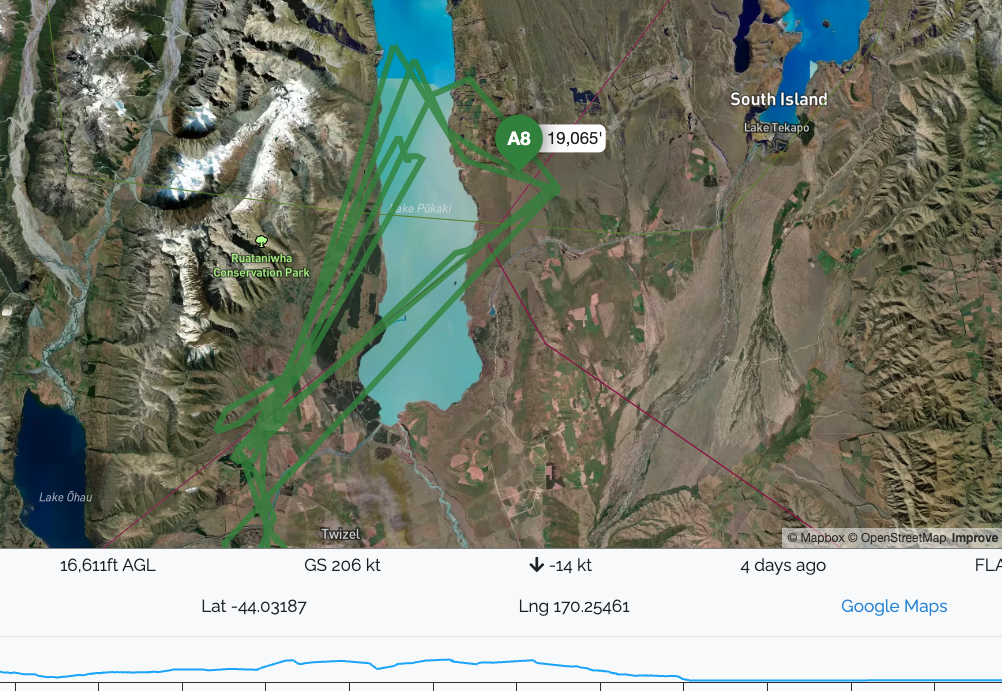
Dane's track shows he flew the task 3 times. The screen shot below shows Dane on the downwind leg at 19,000' with a remarkable ground speed of 381km/hr.
Understanding Gliding Speed Records
Gliding speed records are governed by the FAI, which maintains standards and validates achievements across all classes of gliders. A speed record typically involves completing a predefined course—such as a straight distance, out-and-return, or FAI triangle—as fast as possible under strict rules.
In this case, Dane went for an FAI triangle.
An FAI triangle is a closed triangular course meeting specific geometry requirements (See FAI IGC Section 3 - 3.1.6 b).
Records exist for different triangle distances, such as 100 km, 300 km, 500 km, and beyond.
Record Classes
FAI speed records are divided by glider class, ensuring fair comparison based on aircraft performance.
DO (Open Class)
“Any glider type.”
Highest-performance category with no wingspan limit.
D15 (15-metre Class)
Wingspan ≤ 15 m.
Flaps and other high-performance features allowed.
D13 (13.5-metre Class)
Wingspan ≤ 13.5 m.
PW5 for example. But also more modern miniLAK.
DU (Ultralight)
Gliders with a take-off mass not exceeding 220 kg, “microlift gliders” included.
(A MICROLIFT glider is an ULTRALIGHT with a wing loading not exceeding 18 kg/m2. It does not have separate records).
Notice that there is no separate 18 metre class.
Dane’s flight, completed in his Ventus, sits within the D15G category, making a 258 km/h average over a closed course particularly remarkable.
A Milestone for NZ Gliding
Omarama has long been known for its world-class wave systems, but achievements of this magnitude continue to demonstrate just how exceptional the conditions — and the pilots — truly are. Pending FAI ratification, Dane Dickenson’s performance may soon enter the record books as one of the fastest 100 km triangle flights ever flown, and the fastest one ever recorded and claimed in the D15G category.
GNZ Awards Officer
Bruno Tagliapietra

Upcoming Events
Upcoming Events
Enter now, even if tentative to help the organisers to organise.
Note: The YGNZ camp at Matamata is now full and is in fact over-subscribed with a wait list of hopefuls wanting to get in!
Auckland Soaring Competition
STOP PRESS: World Champion John Coutts and World Record holder Dane Dickenson have entered this contest. This will be a hotly contested contest with some of the best pilots in the world competing. You will never get a better chance to test yourself against the Worlds best. Enter now!
Auckland Soaring Competition
NZ National Club Class Competition
Drury – 3rd to 10th Jan 2026
“Two competitions with a difference” – one based loosely on the Competition Enterprise format. The other – Club Class – will be a fully GNZ sanctioned competition using the current GNZ rules.
Auckland Gliding Club’s application to host the NZ Club Class Nationals event was accepted at the last GNZ AGM. The AGC is super excited to offer a premium competition aimed directly to suit those people who enjoy the challenge and real spirit of flying Club Class aircraft.
The annual Auckland Soaring Competition has become a go to for many pilots who want to fly alongside others, challenge themselves and have FUN.
We want all pilots, friends – including partners and family to enjoy these two soaring events – with a difference.
ENTER NOW – GNZ Website
Note – details on fees and costs will be sorted soon – however we want to gauge support for these two competitions in order to organise our support systems and people.
Full Event Calendar
Auckland Enterprise Competition
Fri 2nd Jan 2026 - Sat 10th Jan 2026
Competition - Auckland Gliding Club - Drury Full Details »
NZ Club Class Nationals
Fri 2nd Jan 2026 - Sat 10th Jan 2026
Competition - Auckland Gliding Club - Drury
Fees not set at July 2025 yet Full Details »
Juniors & Novice event 5 days midweek in Jan placeholder (TBC)
Mon 12th Jan 2026 - Fri 16th Jan 2026
Competition - Gliding New Zealand - Papawai
School holidays comp for juniors and novices.
Each glider must be supervised by a mentor/crew.
Tasking over landable terain.
Simplified contest rules.
Airborne coaching encouraged.
Winch launch.
Fun! Full Details »
NZ Multiclass Nationals-Matamata
Sat 31st Jan 2026 - Sun 8th Feb 2026
Competition - Gliding New Zealand - Matamata
Matamata Soaring Centre is hosting the 2026 NZ Multi Class Soaring Champs. Details will be posted by September 2025. Full Details »
2026 Central Districts Gliding Championships
Sat 14th Feb 2026 - Sat 21st Feb 2026
Competition - Gliding Hawkes Bay & Waipukurau Inc - Waipukurau
Gliding Hawkes Bay & Waipukurau Inc are planning the 2026 Central Districts Championships at Waipukurau from 14th-21st February 2026 inclusive. Practice day would be Saturday 14th and competition days 15th-21st February inclusive. Full Details »
Grand Prix-Matamata
Sat 7th Mar 2026 - Sun 15th Mar 2026
Competition - Gliding New Zealand - Matamata Full Details »
Flying out of Drury
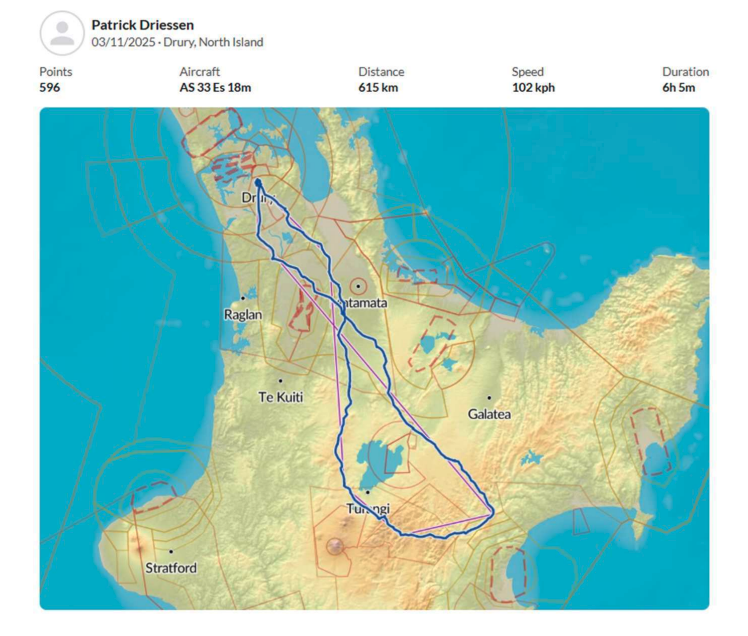
Pat Driessen
Spectacular Start of Season Flights
Pat Driessen
Another soaring season starts in Auckland after a long and gloomy winter watching the Europeans dashing across the countryside with incredible flights everywhere....how depressing.
Anyway, last weekend we were blessed with a dryish airfield, lovely weather and a hopeful Skysight forecast....let's go!
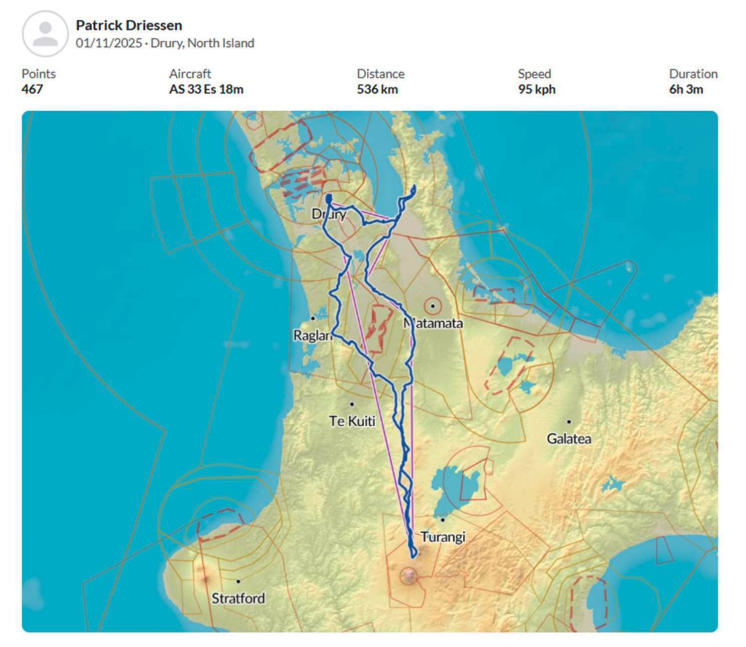
Saturday looked promising on Skysight down the west coast, but as happens sometimes, there was a nice looking cloud street going 90 degrees off track, towards Thames....why not.
There was a 15 knot NE at Thames, so not ideal for continuing north up the Coromandel Peninsula, so it was downwind, southbound, taking advantage of the juicy looking cloud streets going my way. On arriving at the northern boundary of the Hamilton airpsace, I was relieved to find all systems on the glider working...with my radio clear, transponder transponding and me remembering how they worked....YES!
I have to say we are spoilt with Auckland approach and Bay approach. They are so accommodating with us slow moving, squirrelly targets....as long as you call them before you enter airspace (5km +/-) and they know hwat you are doing, all is sweet.
The further south I went, the higher the cloud base, which is pretty normal. The clouds kept beckoning, and the visibility improved. the km's continued ticking by.....Maungatautari, Wharepapa South, west of Titiraupenga and, eventually, abeam Chateau Tongariro at about 7,000ft, the high point of the flight. Time for home! The trip north was fairly uneventful until east of Te Kuiti. The satellite image showed what looked like a convergence along the west coast....so that's the way I went, getting a climb on the northern slopes of Mt Pirongia. The convergence, however, was past it's best and turning to rain. I struggled to within 30km of Drury before using the engine to climb 1,000ft, on to final glide.
And then there was Monday!
I didn't think it was going to be anything special...but...you just never know, and most times it turns out better than you think.
I was the only launch....thanks Fletcher! There was lift locally but it looked like a long glide to the next climb....so I called up Auckland approach for a clearance to 4,500ft....and just as well, as the next climb wasn't until south of Mercer.
I staggered south taking small climbs until the southern end of the Cambridge Hills where there was 7.5 knot beauty with my name on it.
We are lucky in Auckland because the day starts about an hour ahead of Matamata. Tim Bromhead has launched as I approached the Matamata area and I was ahead at Maungatautari mountain....I must start using Pure Track!
The cloud base was ticking up as expected but, so far, nothing special. By the time we got to the hills west of Lake Taupo, cloud base was about 6,000ft and promised to be higher a little further south. So, I called Auckland Area radar, who look after that airspace, for a pre-emptive clearance to 7,500ft. The controller was obviously not used to talking to gliders and got completely confused, so I was happy to vacate his airspace west of Turangi...phew!
It looked difficult to get to the mountains again (ah la Saturday) but a big, slightly overdeveloped convergence to the east in the direction of the Boyd airstrip looked possible. To be honest, if Tim wasn't there, I would have turned for home here...but...you know how it goes... A big glide across the Desert road followed, with a bit of scratching around the foothills on the other side. It took a while to get to a safe height to continue east but eventually got to around 6,500ft. Right....push on. Well, initially, it didn't go so well and then it started to rain, and it actually got quite heavy...but the sink wasn't too bad, so we pressed on...AND...it looked fabulous further on. I had flown off my map about now, but there was limited information on my LX device indicating Napier controlled airspace coming up. Calling them, they were most helpful, clearing us up to 9,000ft and on track, now towards the northeast to the Te Pohue Saddle ...just east of the Mohaka River. Fabulous country with steep escarpments and, today, a beautiful looking convergence right over the top, taking us to the highest point of the flight. King of the world!
What to do now? Well, Tim, initially had the idea to carry on to Lake Waikaremoana, but it was just after 3pm and we aren't even into summer yet....timing was crucial so, hard left turn and set the LX to Drury.....only it said 270km...oh shit!
I have to say I had a pretty good trip north bound, changing lanes (cloud streets) when the need arose, until about the Cambridge hills when it became apparent I would need to go well west of track towards the convergence, to stay airborne.
Here we go again...it was starting to look like my previous flight...same track...same convergence....and maybe the same rain! My luck was in however and the rain held off...getting my last weak climb just north of Glen Murray, for an easy glide home.
"Happy Days"....as Tony Timmermans would say.
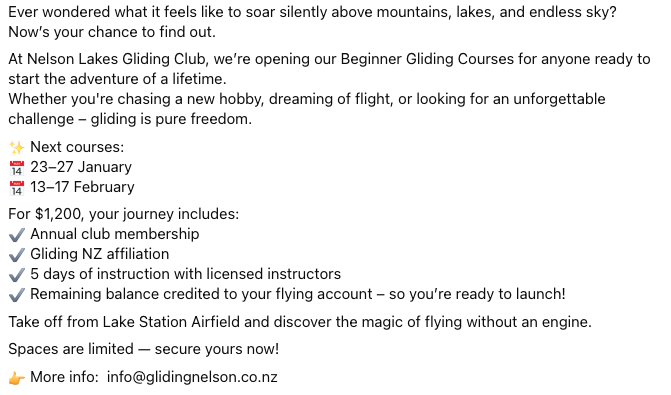
Learn to Fly
At the Nelson Lakes Gliding Club
Beginners Course

From around the clubs
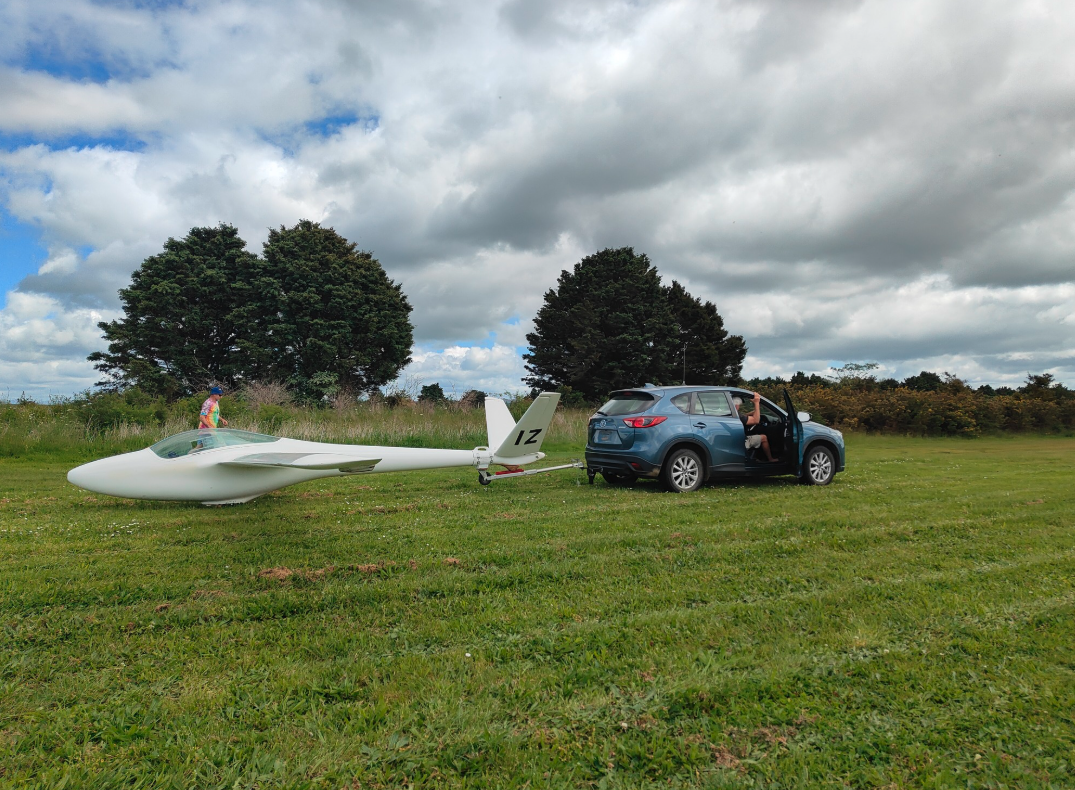
The H101-Salto with its distinctive V-tail. Not a glider type you see every day, unless you fly from the Kaikohe airfield.
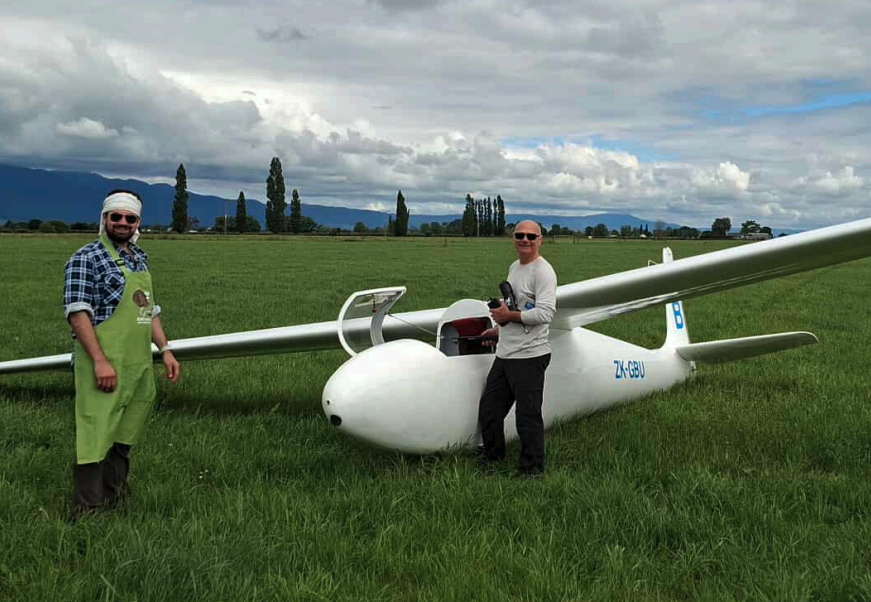
Andrew Fletcher from Whenuapai lands out in Ka 6CR - ZK-GBU
on tow in the Glaser-Dirks DG-300 Elan, ZK-GLW from Drury
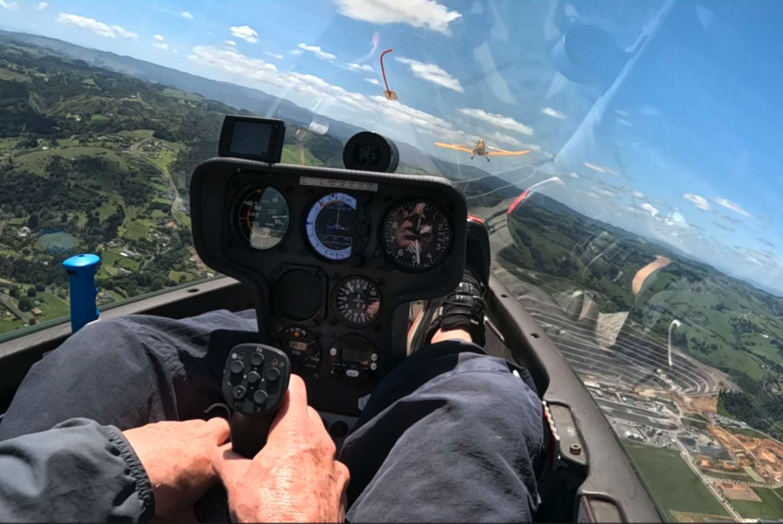
One of 37 launches about to happen on a busy day at Matamata
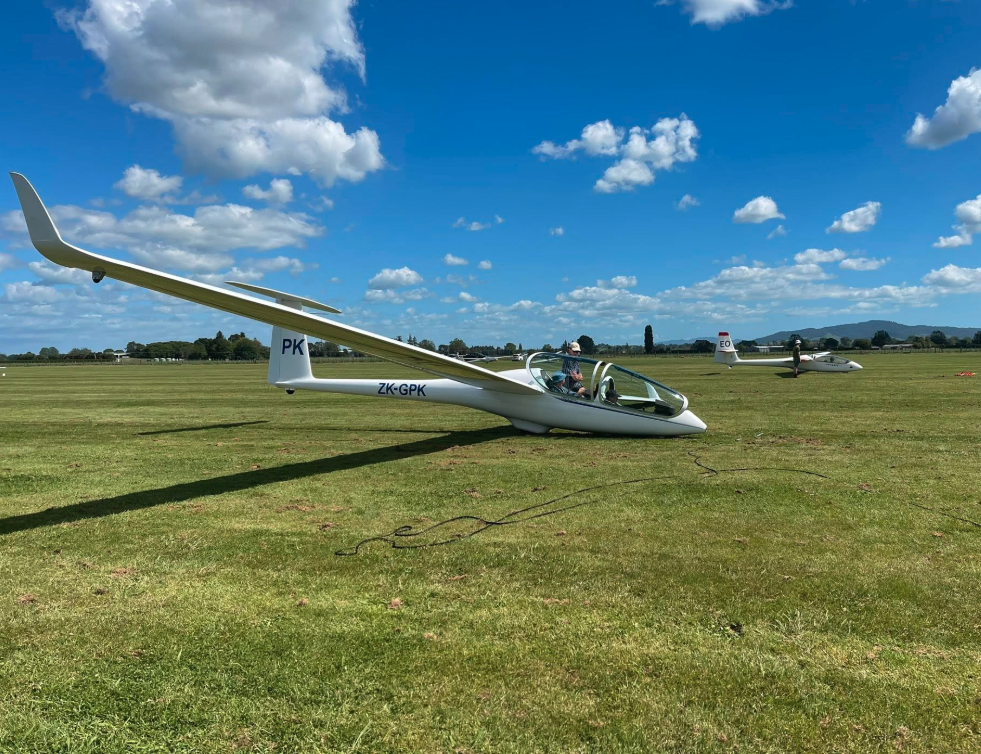
Adrian and Aaron from Tauranga explore Aoraki / Mt Cook during a pilgrimage to Omarama
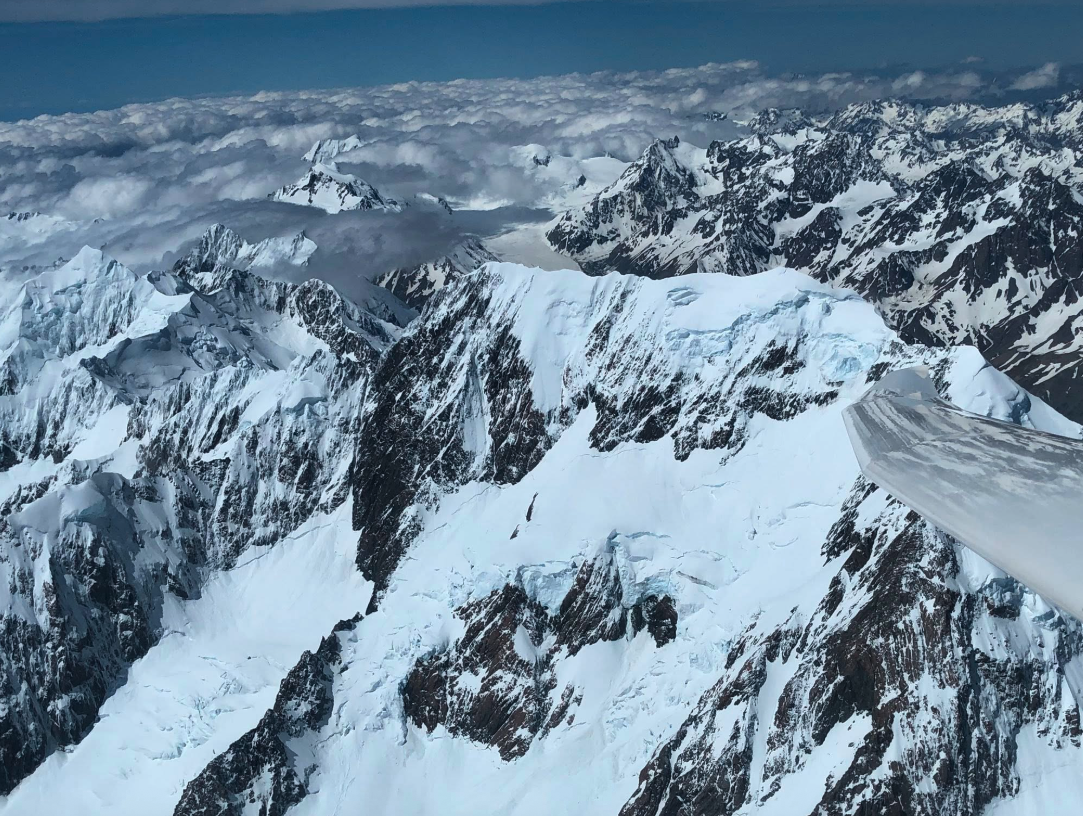
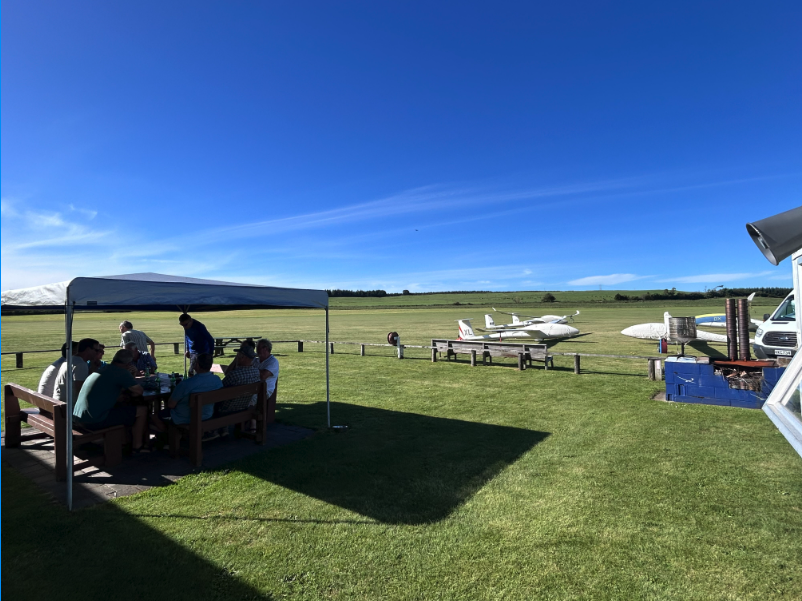
Taupo getting ready for the competition season.
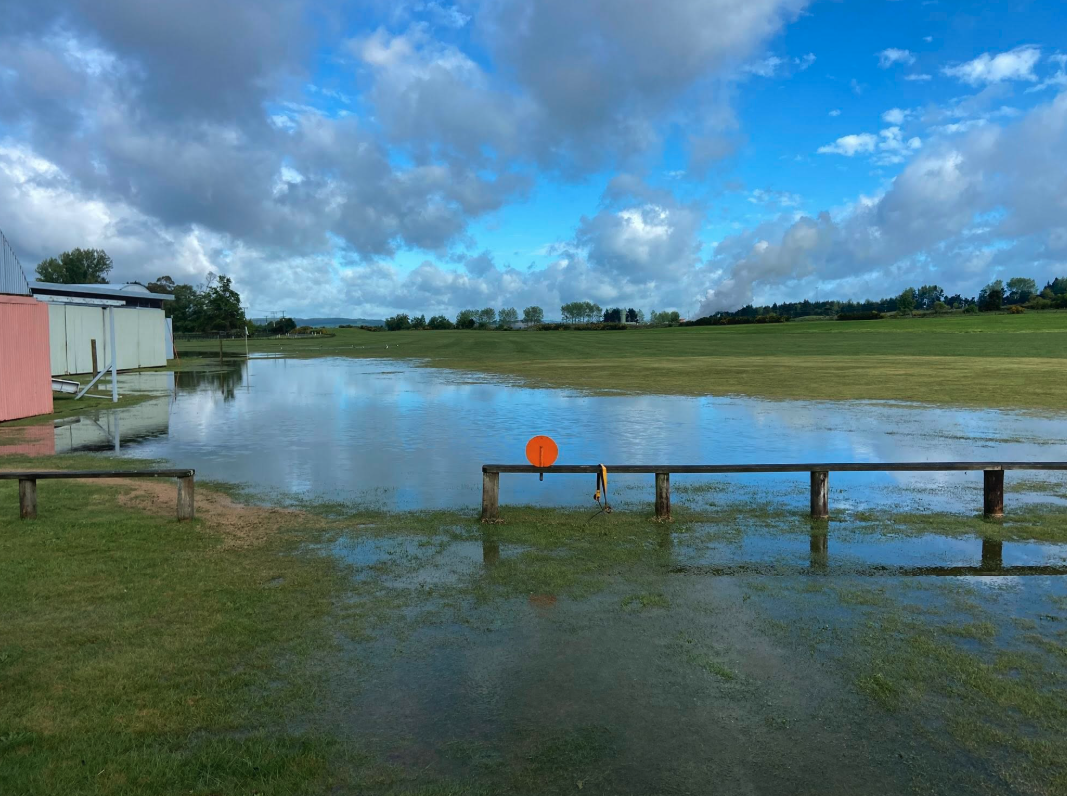
A hot start to the Northern Regionals at Taupo. Shade was at a premium.
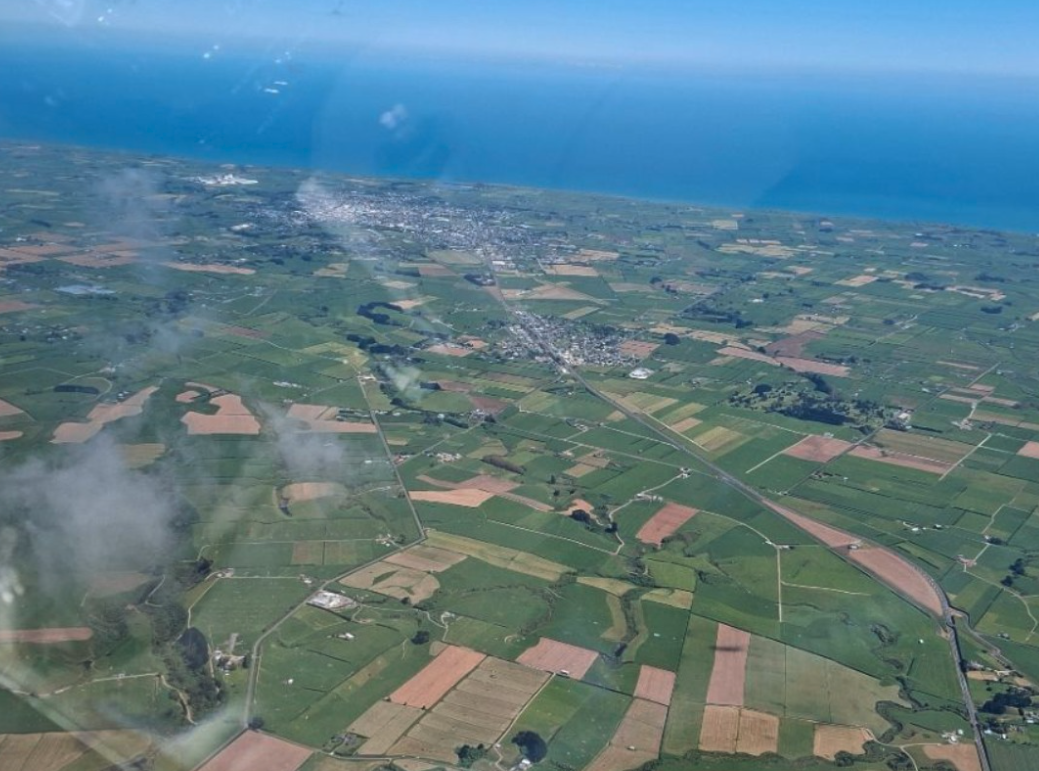
Peter Cook enjoys the view to Normanby and Hawera on a flight from Taranaki.
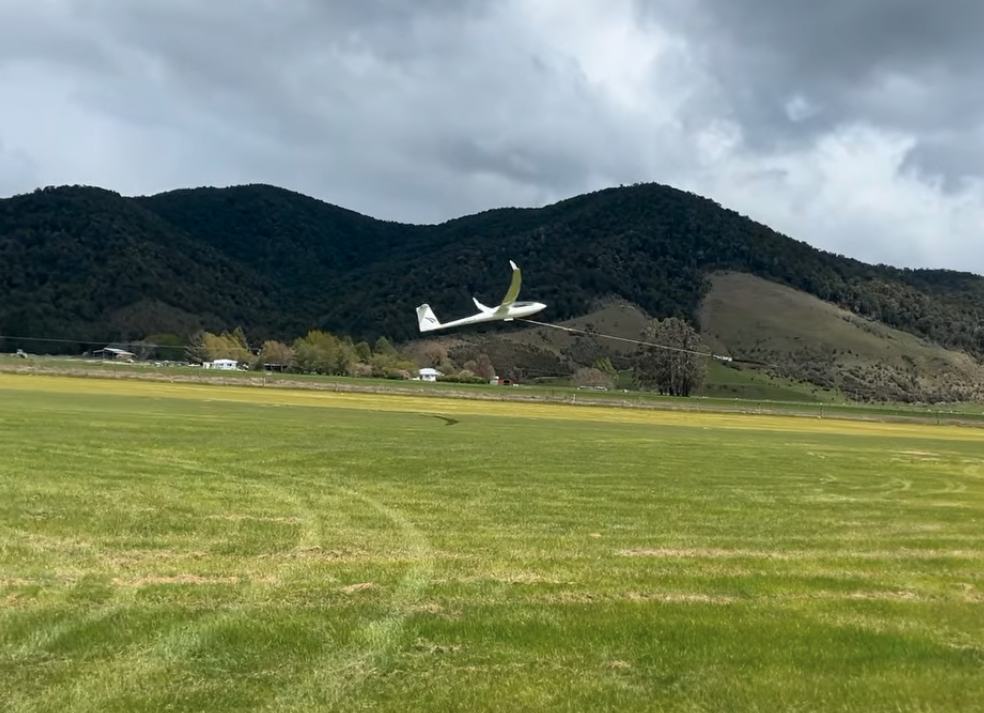
Winch launch out of Nelson Lakes.
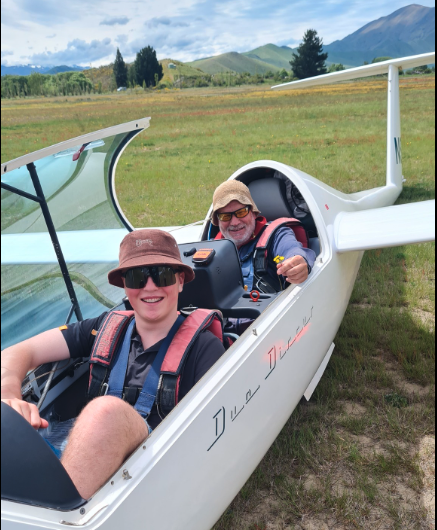
Nigel Davy from Omarama with Ben Sly from Whenuapai at the South Island Regionals - maybe offering Neil Allison a flower?
Neil Allison (aka Windsock) accepts flowers in return for a launch from the grid.

Awesome to see a good gaggle of youth pilots competing at the South Island Regionals

Tuulianna and Charlie on a Friday avo 250km flight from Omarama
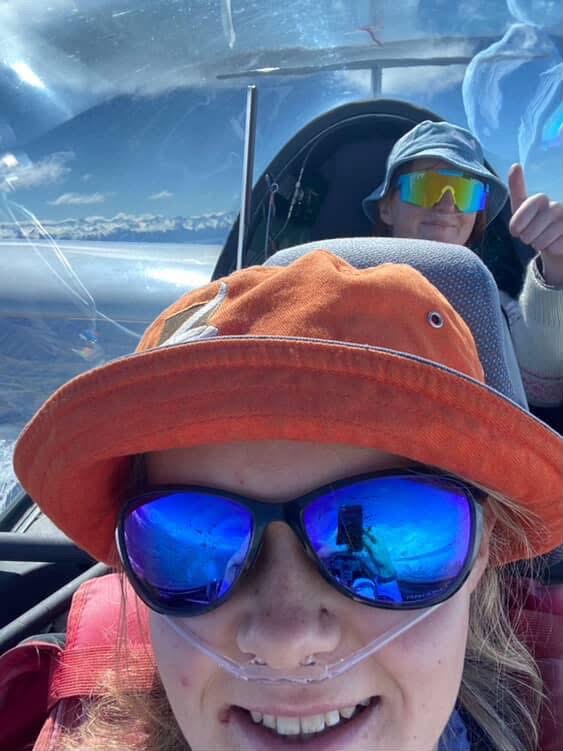
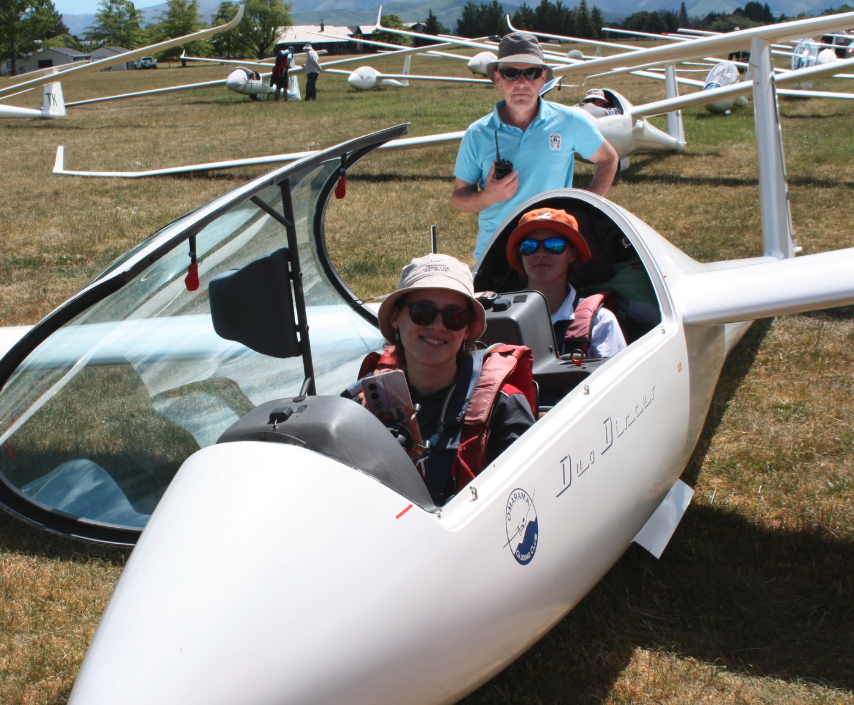
Amy and Tuulianna (part of Team Athena) ready to launch at the SI Regionals
What has V.K. been up to?
A phone conversation, during November, between our president, Roger Brown and David Hirst on one matter, led to another very welcome one. David delighted Roger by asking if we (Vintage Kiwi) would like some spare parts from either of the Papawai resident non-flying K-13s GFL and GFN for our airworthy K-13 GFX? If so, we would need to grab them very quickly as the hangar, formerly used by Jim Bicknell, is soon going to have a major tidy up and a lot of junk will be going. Included would probably be those two remaining K-13s, certainly the Bocian GEB and possibly the two resident Olympia 460/463s (GDF and GDJ) as the Wellington Wairarapa Gliding Club requires the hangar to make it available for glider rental spaces.
We quickly organised a small team comprising V.K members, Chris Money, Paul Castle and Derry Belcher. Armed with an extensive K-13 “shopping list”, they drove down to Papawai on a “grab and run” raid. They did well in procuring most of the sought items. Well done guys!
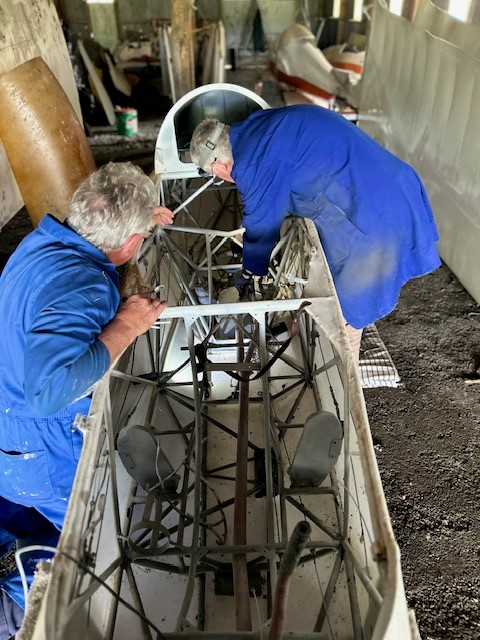
Our thanks also go to David Hirst for allowing us first pickings and also for helping with information to include in our club’s section of this newsletter.

ZK-GFJ update
As reported last month, initial steps are underway to save Doug Yarrall’s altitude record breaking SHK-1 GFJ. November saw the next stage take place. Another small V.K group (Roger Brown, Phil Rees and David Cleverly went to Tauranga and met up with member Peter Layne and also John Pheasant and Colin Alexander (Solo Wings). The exercise was to remove the accident damaged glider from its trailer for temporary storage and stow it carefully in John’s hangar.
During December, GFJ will be assessed for possible restoration to museum display standard. Initial thought is it’s definitely doable. We will have a better idea in December when a thorough inspection will be made.
Saving any glider is always great but to save Doug Yarrall’s altitude breaking glider is a real bonus.
Our thanks go to Colin for making the glider, spare canopy and manual available and to John for making space available prior to the assessment.
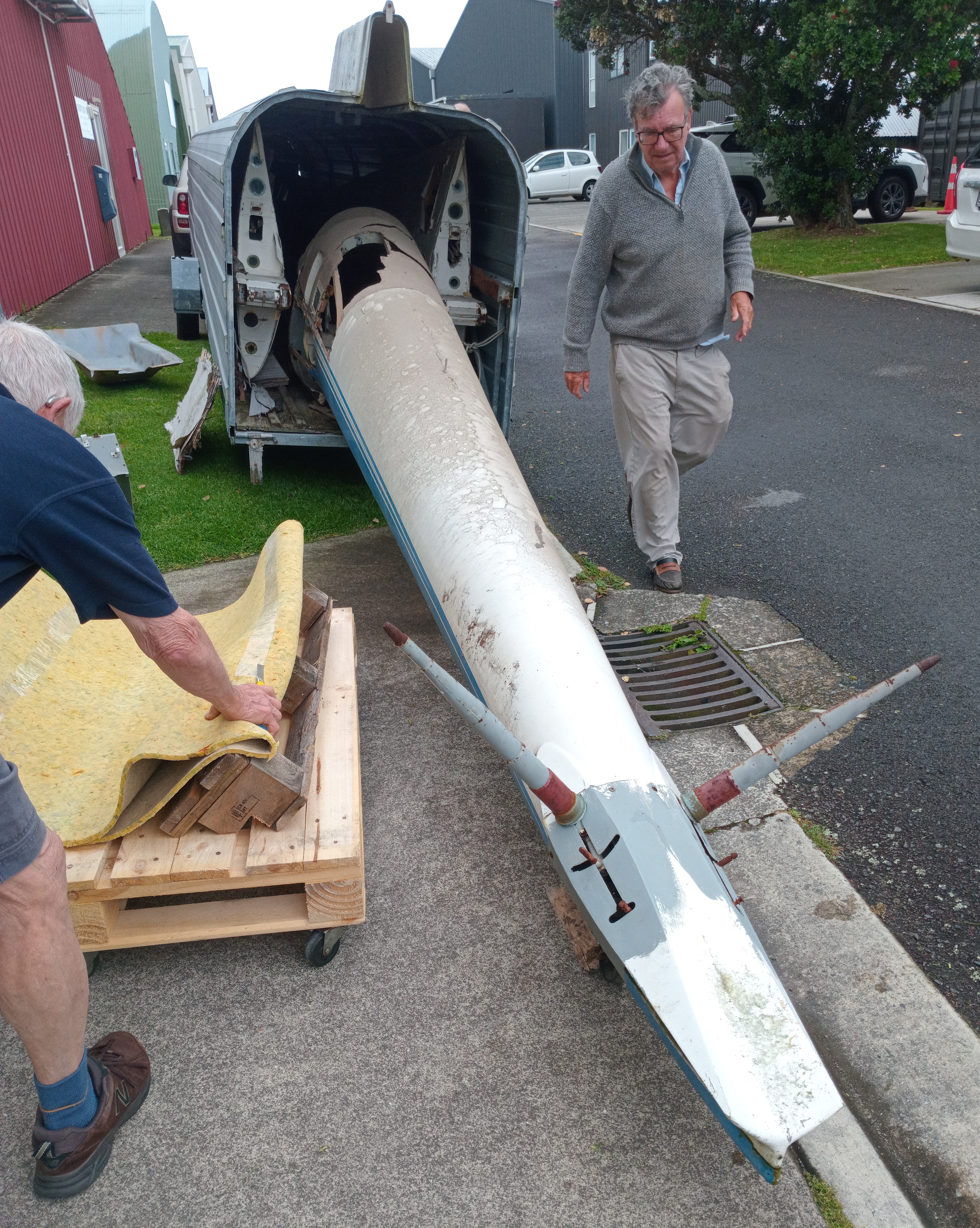
Peter Layne
Membership
Membership Display Panel
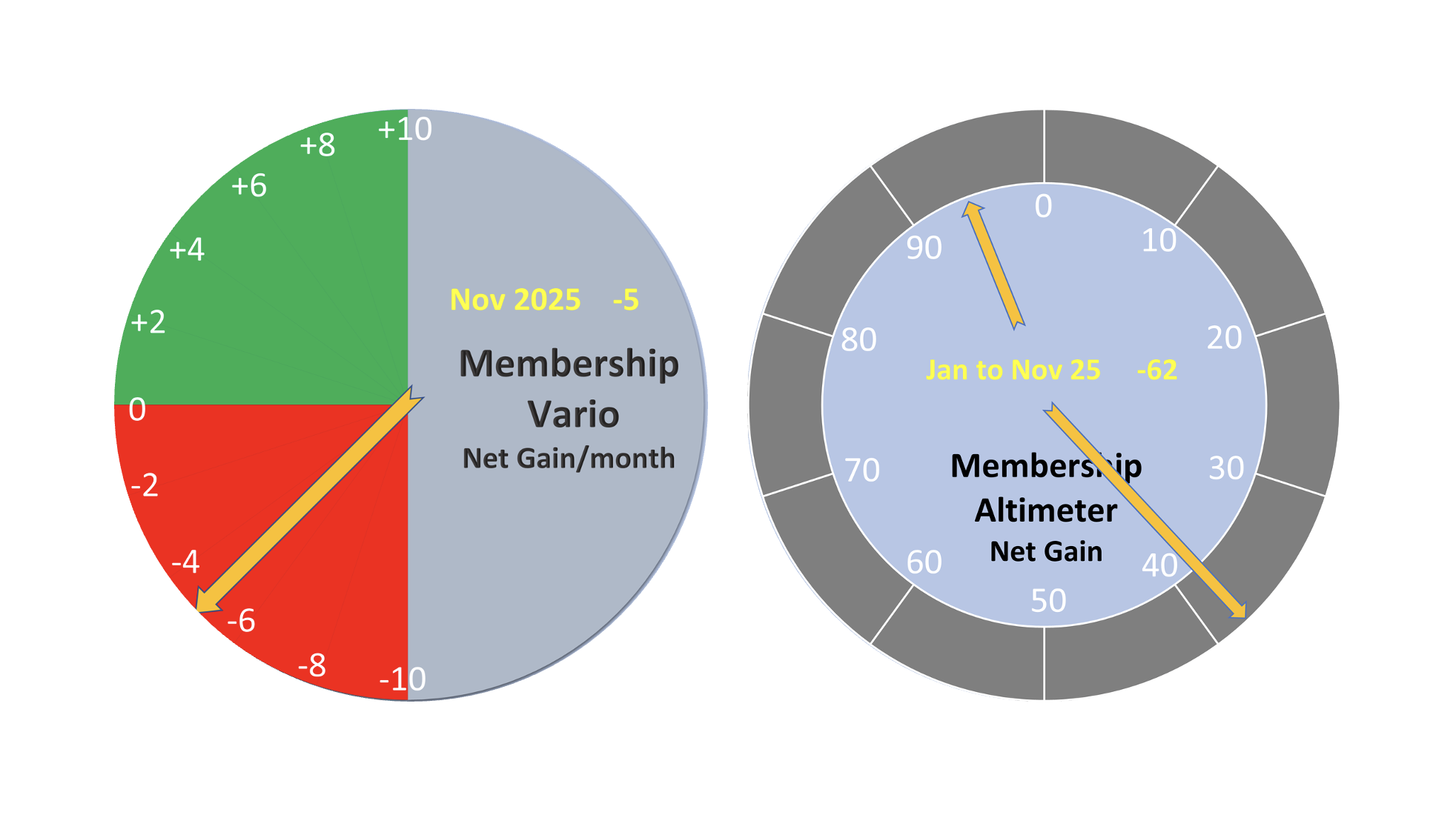
Ok, here we are back on the scale again after the October membership clear out of -91. For November we were down another 5 but this should be the last of the negative numbers for a while as the summer membership build up begins. This does however put us on -62 for the year with one month left to run so on the membership altimeter we are still below seal level! I know many clubs are running active campaigns to attract new members at the moment so lets see where we finish for the year once the December numbers are in.
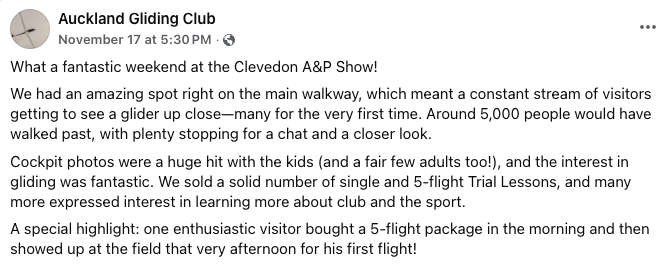
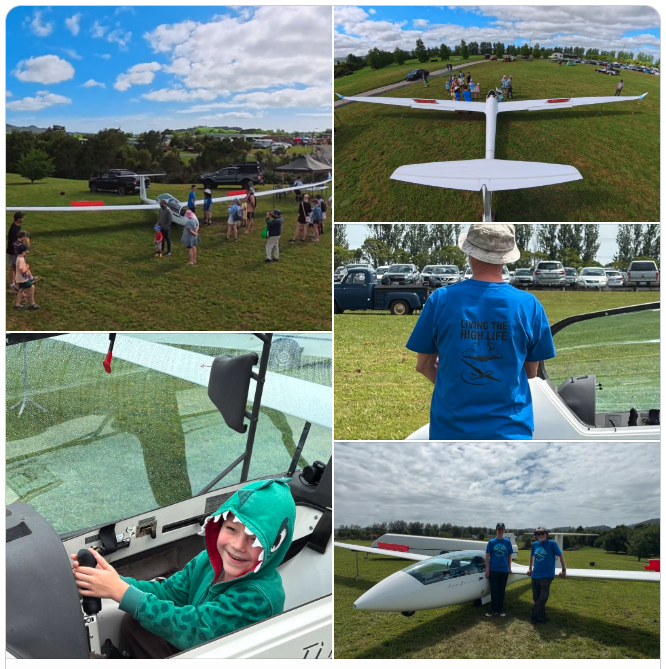
Here's what Auckland has been up to.

NOTAMS
End of Support for Classic FLARM
After many years of reliable operation, we are announcing an important change today: Official support for all Classic FLARM devices will end on 30 September 2026. From that date on, no software updates, no technical support, and no obstacle data will be provided for this product line. Operation of existing devices will remain possible from software version 7.40 onwards.
Why are we taking this step?
Classic FLARM was a milestone in flight safety for gliding and powered flight when it was launched. The devices still perform their job reliably — however, their technological foundation dates back to a time when computing power, memory, and radio technology were far more limited than today. As a result, many functions developed for modern PowerFLARM devices cannot be implemented on Classic systems, or only in a limited way. In addition, sourcing spare parts for older electronics has become increasingly difficult.
What does this mean for existing users?
- Classic devices remain usable. Devices can continue to be operated as usual (from software version 7.40 onwards).
- No more software updates. This also includes safety-relevant updates or bug fixes.
- No technical support. Inquiries regarding Classic devices will no longer be answered.
- Obstacle data can no longer be purchased for Classic devices in the webshop.
What do we recommend?
We always recommend checking every FLARM installation at least once a year to ensure proper operation. The corresponding instructions can be found in our ICA. If a Classic installation is working well, there is no immediate need for action. In cases of poor reception range, we recommend upgrading to a modern PowerFLARM device.
Regardless of this, for future installations, fleet upgrades, or safety-critical applications, we recommend planning an early transition to current PowerFLARM devices. In addition to offering greater range, more interoperability, and more features, they also provide the assurance of being equipped for future developments.
Update from Omarama Airfield Limited
The team at the Omarama Airfield Limited and its partners have all been working incredibly hard together on making Omarama one of the best aviation destinations in the country.
The Omarama Airfield Limited (OAL) directors have been progressing a number of projects to
improve the facilities, amenities and services on the airfield and we will be reporting on these
each month so that operators, users and visitors are fully informed. The directors welcome
feedback on any of these projects and are open to new ideas and opportunities that will
continue to improve the operation and facilities of the airfield.

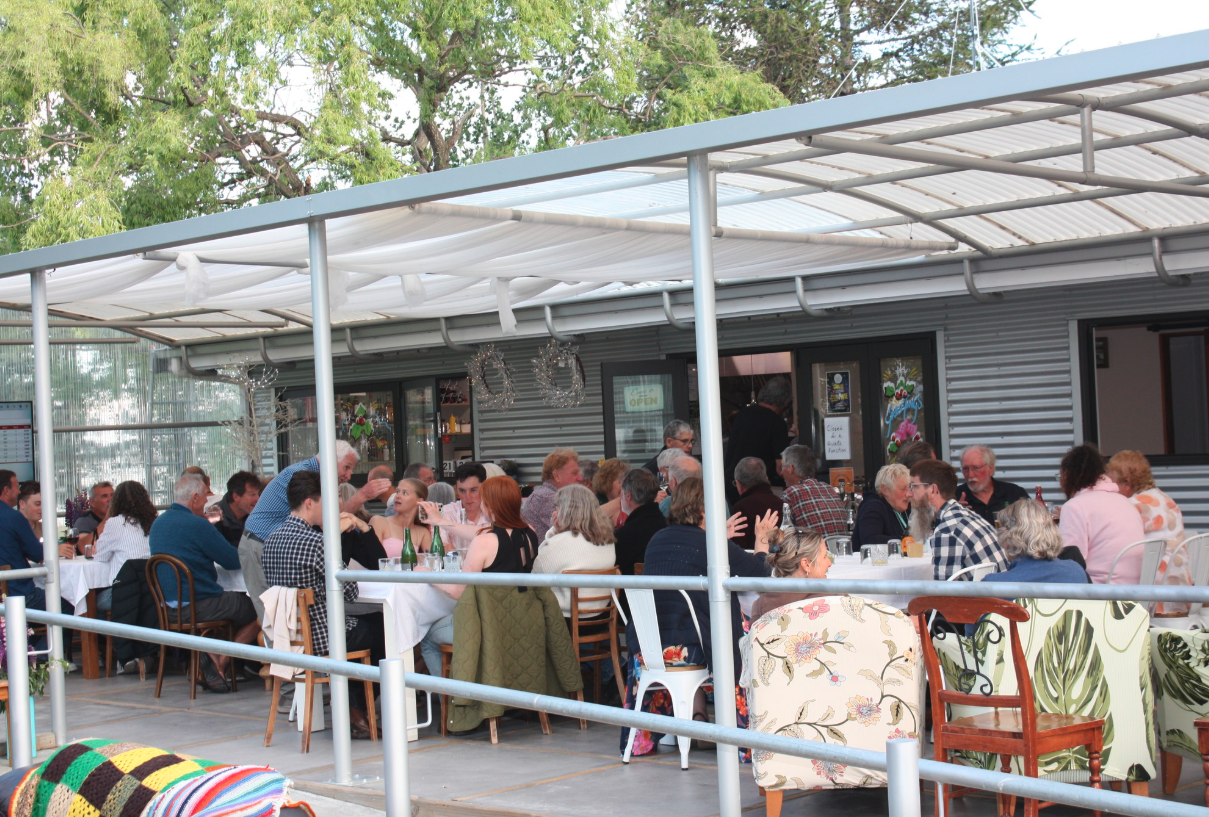
We are thrilled to announce that local residents Jennie and Simon Hales have taken a lease on
‘The Glider Café’ which had a soft opening on the 30th of October. They have been busy getting
all the systems and facilities cleaned up and running. Terry and his helpers have worked hard to
waterblast, paint and fix up the building and its surrounds and all is set to restore an operational
cafe on the airfield. The coffee, food and service is reported as excellent.
Daily Weather Briefings
OAL is pleased to advise that Dan McCormack and his associates have been contracted to
provide a daily weather briefing at 10am in the terminal from October to 01 May 2026. This
service has commenced and feedback from the initial sessions is positive. Please feel free to
reach out to Daniel and/or his helpers to provide feedback about your experience with the
service or any ideas you have.
Daily Operational Meetings for Senior Leaders/Managers/Instructors/Tow Pilots.
OAL has contracted the Omarama Gliding Club (OGC) to provide and chair a daily operational
and safety meeting for the Chief Tow Pilot, CFI’s, senior instructors, launch point controllers,
leadership members and/or their authorized delegates from all parties who intend to operate
from the airfield on that day. The meeting is held in the terminal building meeting room, or as
otherwise advised daily at 9:45am between October 2025 and 01 May 2026.
The operational and co-ordination outcomes of this meeting will be reported at the start of
10.00am Operational and Weather briefing which should be attended by all parties
intending to operate from the airfield on that day.
Terminal Building & General Improvements
There has been a big effort to tidy up the terminal building and get some maintenance items
ticked off. Some of these are a work in progress but the list includes:
- All old redundant and broken appliances have been removed.
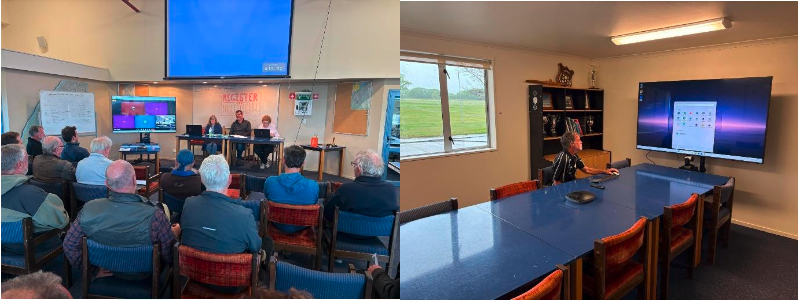
- The meeting room has been cleaned up and a modern high-tech video conferencing
system for general training and conferencing use has been installed.
- A new fridge with ice making and filtered water facilities has been ordered and will be
shortly installed.
- All the last decade unused redundant systems and plugs for downloading GPS devices
are in the process of being removed.
- Some areas inside and outside of the terminal building have been tidied up and are soon
to be repainted.
- The parking area trees have been trimmed and painted.
Glider Towing
The OAL tow operation commenced on the October 1st under the stewardship of Chief Tow Pilot
John Reid (JR) and his onsite towing manager Luca MacGregor. Reports from customers have
been very positive and the operation and its billing system have bedded in with very few issues.
Code of Conduct Policy
OAL has recently updated the ethics and code of conduct policy which has been uploaded to
the website. All airfield operators, pilots, users and visitors should make themselves familiar
with and comply with this policy which is aimed at keeping the airfield a positive and enjoyable
place to be.
https://www.omaramaairfield.co.nz/ethicsandcodeofconduct
Updated Fees Information
OAL has recently updated the fee policies and uploaded to the website -
https://www.omaramaairfield.co.nz/fees
Standard Operating Procedures (SOP)
The Standard Operating Procedures (SOP) document has, following the April 25 workshop, been
updated to accommodate the matters raised by users. This is a “living” document which can be
amended by OAL at any time.
Airfield users are encouraged to advise OAL of any safety, operational and management issues
they identify so they can be discussed and if necessary, the SOP can be amended. The latest
update is available on the website –
https://www.omaramaairfield.co.nz/sop
Airfield Maintenance
The runway and surrounds have been top dressed and the grid positions for 27 and 09 are to be
marked in order to provide certainty as to where the front row of gliders should be.
OAL are continuing to investigate the opportunities to relocate the irrigation bore to provide
greater security over the water supply which is essential for maintaining a usable runway.
A significant effort has gone into mowing, rolling, spraying and preparing the runways and
grounds for the season.
Upcoming Events
Omarama Soaring Center Advanced Cross Country Course 12th - 17th January 2026.
Sections for Sale
OAL has a limited release of Nimbus Drive lots for sale. Three have been sold and the proceeds
from these sales provide, after debt reduction, capital for the company which is being used to
future proof the airfield and its operations.
More information online at https://www.realestate.co.nz/42751018/.
On behalf of the directors Hadleigh Bognuda, Terry Jones, Simon Williamson,
Clive Geddes
Chairman
Omarama Airfield Limited
clive@omaramaairfield.co.nz
From the desk of the NAO
Glider Maintenance
As we enter into the start of a new soaring season, and as aircraft come back into action again after a winter of hibernation and maintenance it is a good time to pay some extra attention to your aircraft.
I have covered a few areas which I think are worth paying attention to, hopefully some will take note, I know most pilots eyes tend to glaze over whenever maintenance is mentioned..
A note to all the engineers out there:
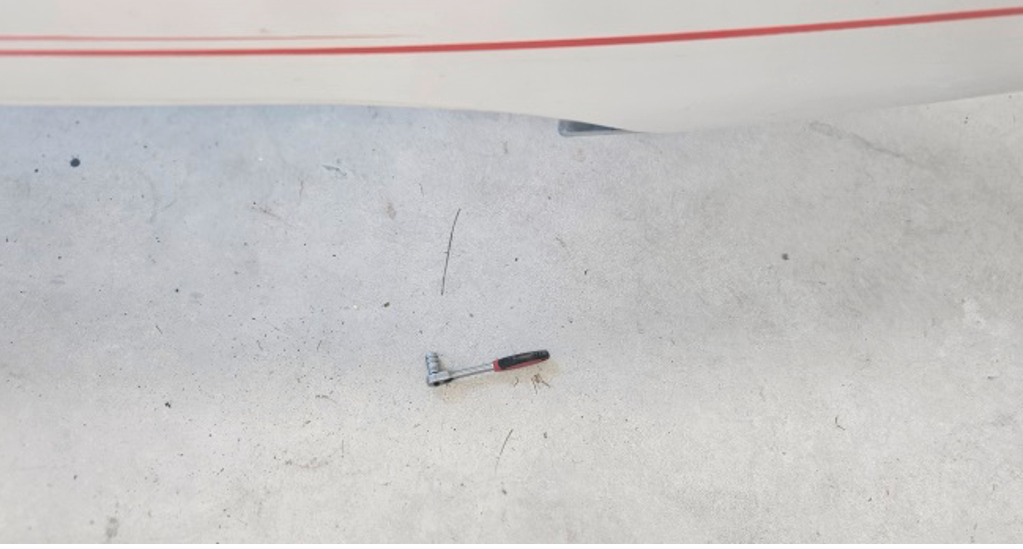
While recently turning an aircraft upside down for maintenance work, the below tool fell out of the cockpit onto the floor, (seat-pan had been removed). Where and how long it has been hiding in there I don’t know?
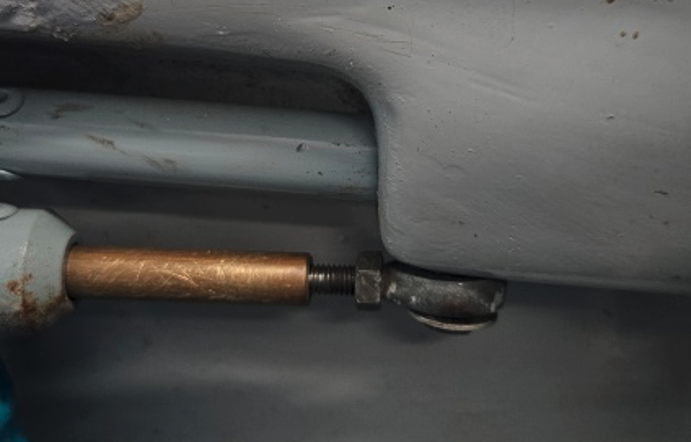
The below photo shows an airbrake slide rod unwinding with the locking nut, this should have been spotted during a recent Annual Inspection and again during a DI inspection. Wasn’t far from becoming disconnected.
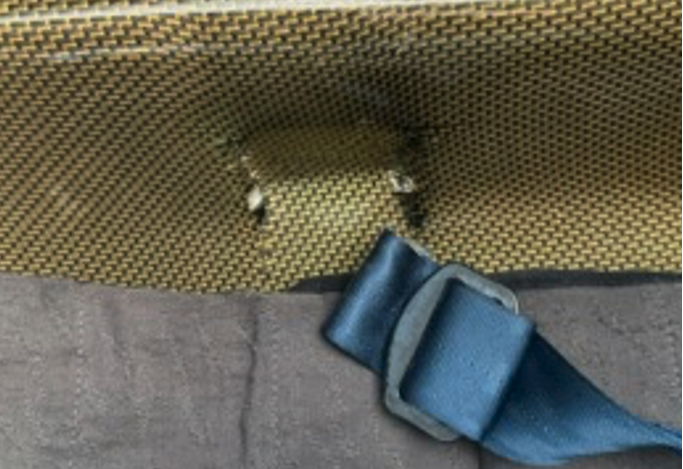
I completed an Annual Inspection recently and sent the aircraft home, then to receive a call from the owner asking why the seatbelt was loose and the bolt missing? What I said? (See photo) That is very strange I had the seat belts out for washing and clearly remember refitting it..
What I think occurred is that during the reinstallation of the seat pan the R clip retaining the strap bolt on the underside of the seat pan must have gotten knocked off and during the trailer trip home the bolt vibrated out leaving the belt as shown, both the bolt and the R clip were located directly under the seat pan. (This is only applicable to various Schempp-Hirth aircraft and worth all Engineers paying attention to in the future).
The above indicates that things can get missed, missed placed, or just the unexpected can occur. All are very fortunate to have been evident on the ground and to not have surfaced while in the air.
This is a reminder that we Engineers need to be diligent while we carryout maintenance and take a step back to ensure the work being done is getting the attention it requires. Make sure you;
- Have processes for ensuring all tools are accounted for following work completion.
- Ensure inspections are actually being carried out and that you are not just going through ticking the box..
Reminder on Cables:
Pay particular attention to the control cables, rudder, tow release cables, etc. Some of these can be difficult to inspect. Some aircraft will have their tow release cables operated several thousand times a year..
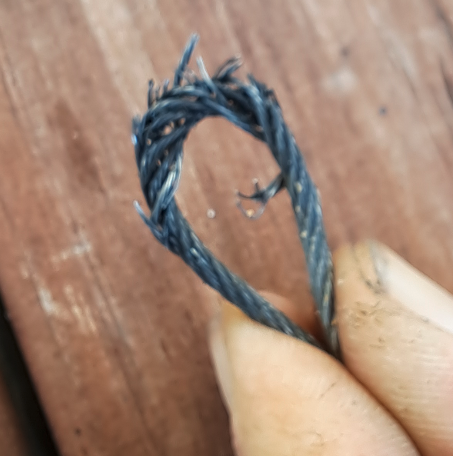
The above leads to the below for all the Pilots out there:
A lot of aircraft have been through resent maintenance inspections and as the above indicates, items can go a miss so those DI’s are an important inspection. They should be carried out with due care and attention!
Reminder on the Daily Inspections:
The morning “DI”, the almost taken for granted signing off the little Yellow book before we launch into flying for the day. How much attention are you actually paying to this?
As pilots we are actually the first “engineer” of the day to sign off that the aircraft you are about to take to into the air.
As private owners we can go through the motions of a DI without really paying attention. Or for some is it no more than a quick glance over?
Motor Gliders
We have a large fleet of motor gliders which have a substantial amount of moving parts and a fair amount of vibrations to contend with. This means you need to look more carefully!
We are flying some pretty amazing aircraft, worth remembering that most of them are held together by glue. Maybe that NEXT DI inspection deserves a bit more attention?
- It is worth paying more attention to the DI of your engine and associated parts, especially those parts which are hidden away, not so easily seen.
- Wires which are tied up in a bunch could be slowly wearing against each other
- Those connection plugs which have been surrounded with insulation tape may be worth a better inspection
- Cracks in the exhaust system, not easy to see
- Cables and bungee cords operating the doors
It could be a small thing which causes the next problem. A handy small spot light is a great tool for seeing into those hard to access spots.
Reminder on Hidden Damage:
Our slender, streamlined, stunning aircraft are not immune to receiving damage, even from a slight event. Most of the time we as pilots will have a fair idea that something has gone a bit haywire and the aircraft may have signs of damage visible, sometimes minor and sometimes not so minor.
However there is certainly the possibility that even if all looks good and “it looks like we got away with that one”, something has actually sustained damage, and all is not OK.
I am aware that most types of glider have their own vices when it comes to succumbing to some form of hidden damage.
- Some do not take well to landing with the wheel up, even when the landing has been as smooth as silk, they tend to crack bulkheads loose.
- Some do not withstand ground looping, resulting in internal vertical fin fractures, without any sign of damage being visible externally.
- Some models don’t take heavy landing as well as others do, resulting in wheel box structure damage, only visible if we get down and look up into them.
- The large span gliders and the heavy twins, with all their weight and momentum don’t need to be moving too fast in the wrong direction to cause problems somewhere.
The point I would like to make is that incidents and accidents will happen, and things will not always go the way we would like them to.
If an event has taken place, there is no embarrassment in it, have a chat with an engineer, seek their advice, they will be able to confirm if an inspection is required before the aircraft can be released back into service.
Interested in;
Becoming a new GNZ engineer?
Up-grading current engineers qualifications?
Would like to part take in an Engineers course?
Has any specific engineering request or goals?
For anyone interested, please contact me so I can gauge the level of interest and look to make suitable arrangements
Or if you have any queries I may be able to help with.

Jason Shields
National Airworthiness Officer
JasonShieldsNAO@gmail.com
Incident Reports
Incident reports October - November.
- pilot accidentally flew into a parachute drop zone before all parachutists had landed
- undercarriage damage in outlanding - thick clumps of grass triggered a ground loop
- pilot missed radio call from ATC because glider engine was running
- battery ran flat during flight after maintenance due to not being charged before flight
- experienced pilot landed glider close to caravan - risk of weather-cock in cross-wind
- rudder pedal jammed by shoe when turning onto final - unsuitable choice of footwear
- no ASI on first flight after annual inspection - pneumatic connecter not plugged in
- pilot accidentally released harness while tightening straps on pre-landing check
You can access all back copies of the Ops Team Talking newsletters.
These have been placed on the Gliding NZ web site under News > Safety Bulletins A link to the GNZ accident & incident reporting form (OPS 10) can be found in the very top menu bar on the GNZ homepage, just to the right of the 'Classified Adverts'. You can now fill this form out on your phone at the airfield, so no excuses.

OPS 10 link: http://gliding.co.nz/wp-content/uploads/2019/06/OPS10v7f.pdf
In the case of an accident, asap please phone: 0508 ACCIDENT (0508 222 433)
NOTE: The OPS 10 form has been renamed and amended to include reporting of accidents as well as incidents – previously it was intended for incidents only.
(A CA005 still needs to be sent to CAA for accidents, but the OPS Team doesn’t require a copy of that now.) Consequential changes have been made to the MOAP and AC 2-08.
GNZ Classifieds
Glasflugel Libelle 201b
What a great first glider. A good cross country machine and on handicap still a competition winner!
Go halves with a mate and you're only talking $8K each. The freedom of flying doesn't get cheaper than this!
1800 hrs
774 starts
LX nav s100 flight computer
ASI
Winter mech vario
Becker radio
Compass
Flarm mouse
Tracker
New belts
Covered trailer
Wing walker and tow out gear
Good condition classic glider
Contact Information
Contact: Jason
Phone: 021 157 9278
Price: $16,000
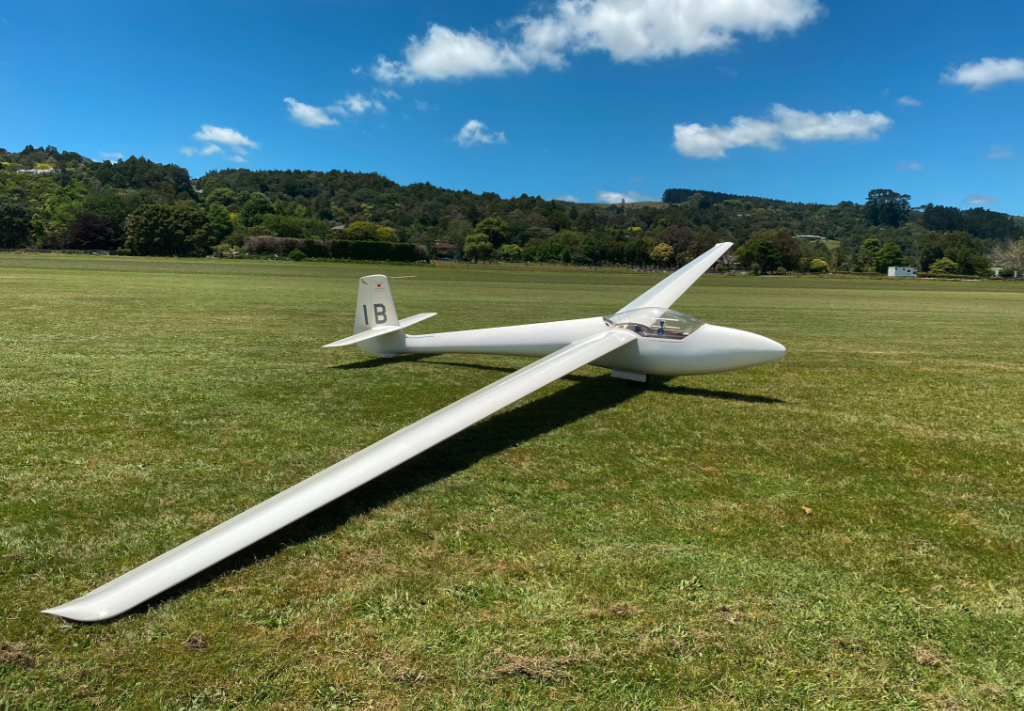
For more gliders and other gliding stuff you can check out the GNZ classifieds at the link below.
Thanks for reading
All contributions, pics, videos and opinions welcome
EMAIL: president@gliding.co.nz