GNZ Newsletter May 2026
From the president
Welcome to May, 2026
Weather wise, April was a mixed bag for most. Some nice days of flying with some excellent achievements and some rubbish days where thoughts turn to maintenance and what to do to prepare for next season.
Preparation and persistence is the key to great gliding flights. Whether you are pre-solo and reading the next topic in the training programme or you are a seasoned pro planning a big flight, it's all about the prep and then keeping at it.
No matter the month or the weather, somebody is always doing or planning something awesome.
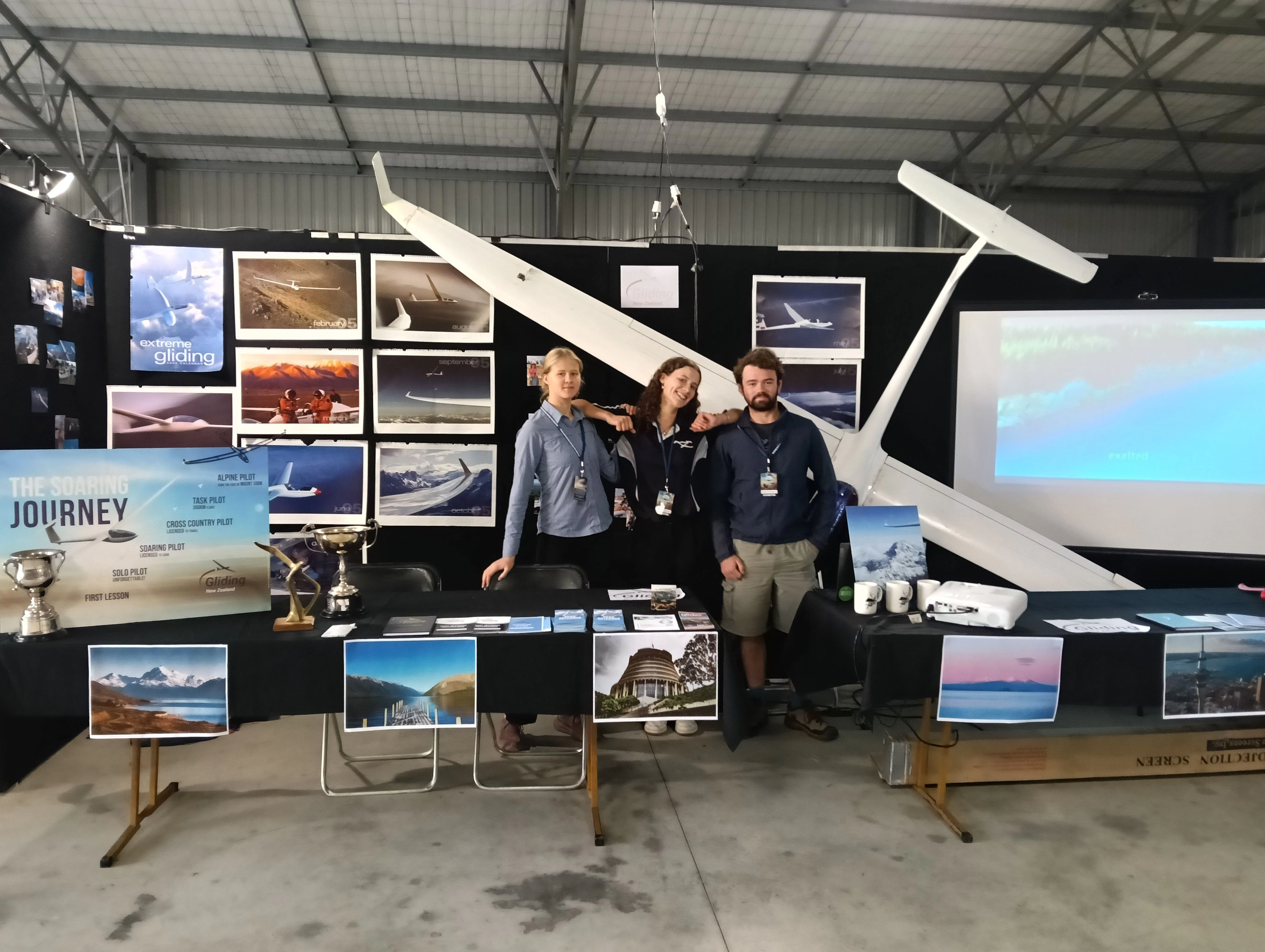
Congrats to the team of Amy Smith, Felix Harper and Tuulianna Laukkanen who created and crewed an excellent display on behalf of GNZ at Warbirds Over Wanaka, to Abbey Delore who commentated the show and to Mike Strathern and Doug Hamilton for the gliding aerial display.
Best of luck with your plans to make the most of May.
Nigel Davy
GNZ President
Congratulations
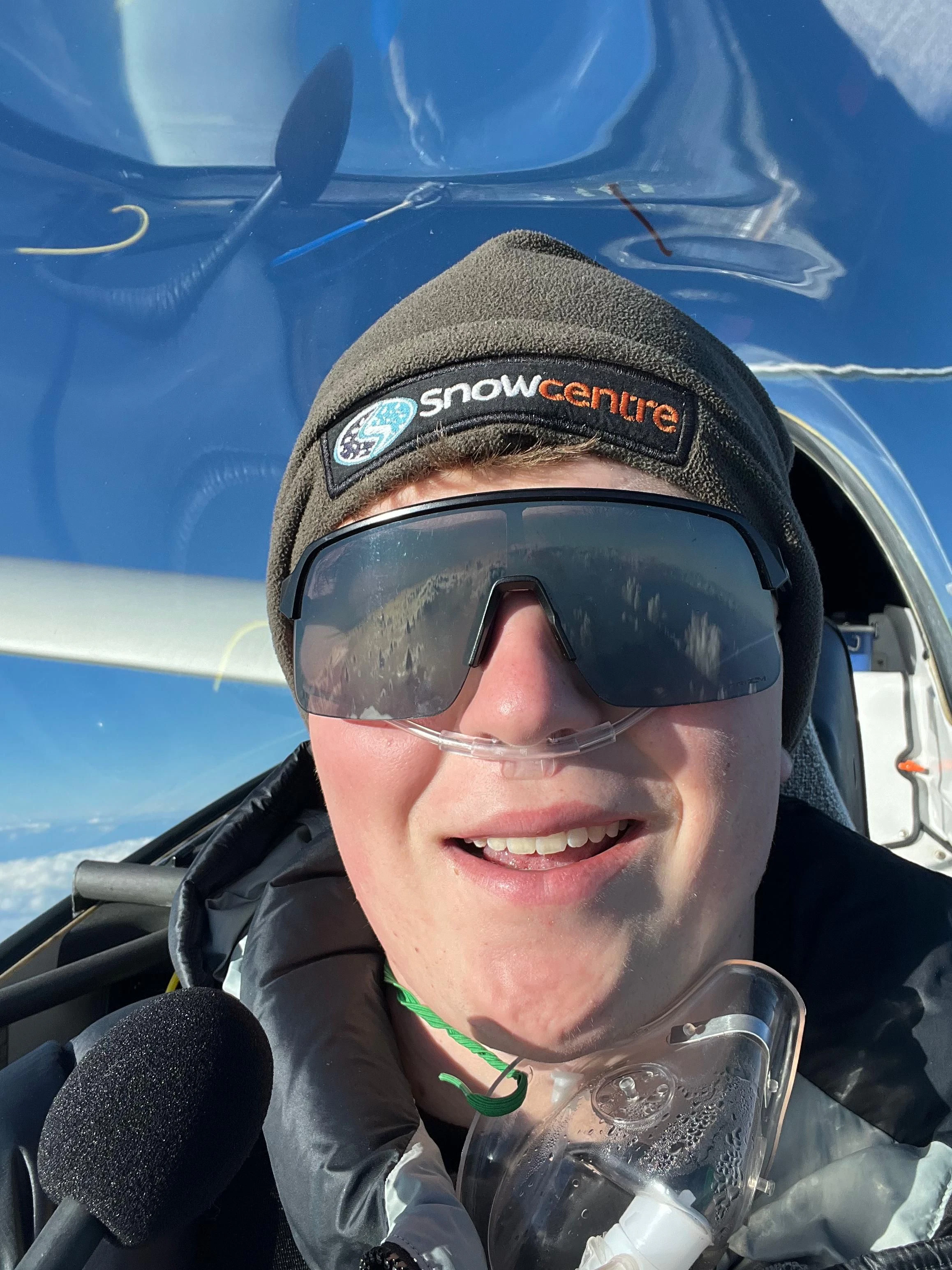
BEN SLY
FAI Gold Badge complete, plus diamond height gain with a flight to 25,000' in the Tauranga wave
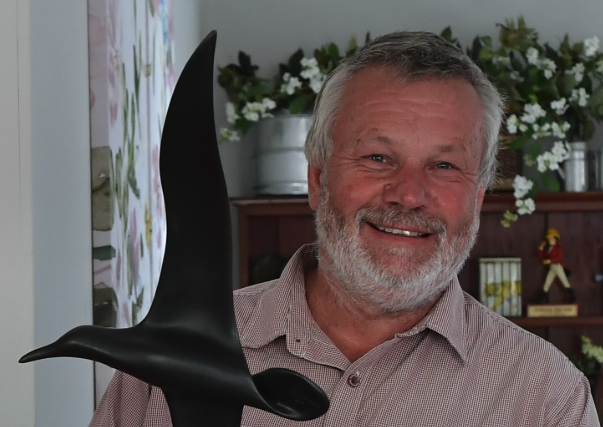
CRAIG EMENY
1st solo (in a glider). Craig has over 30,000hrs flying experience!
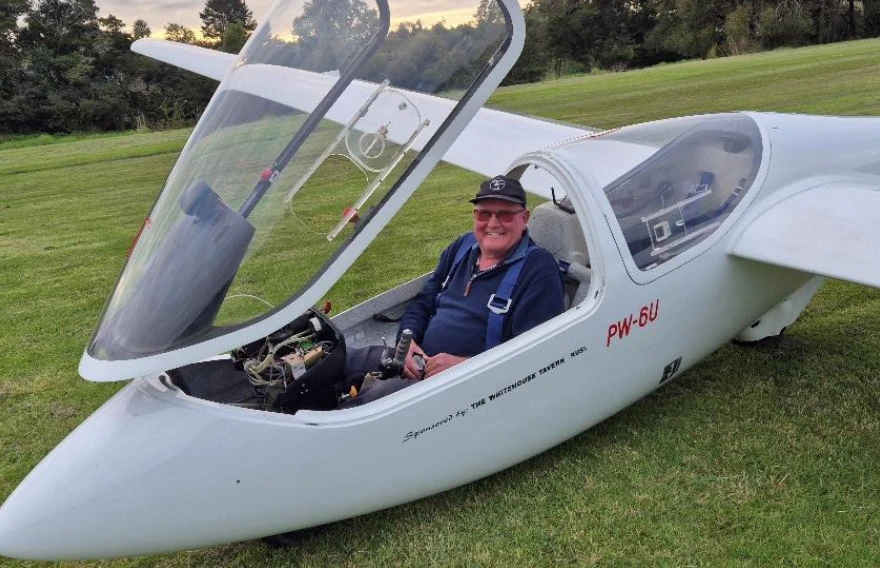
ALEX MAXEY
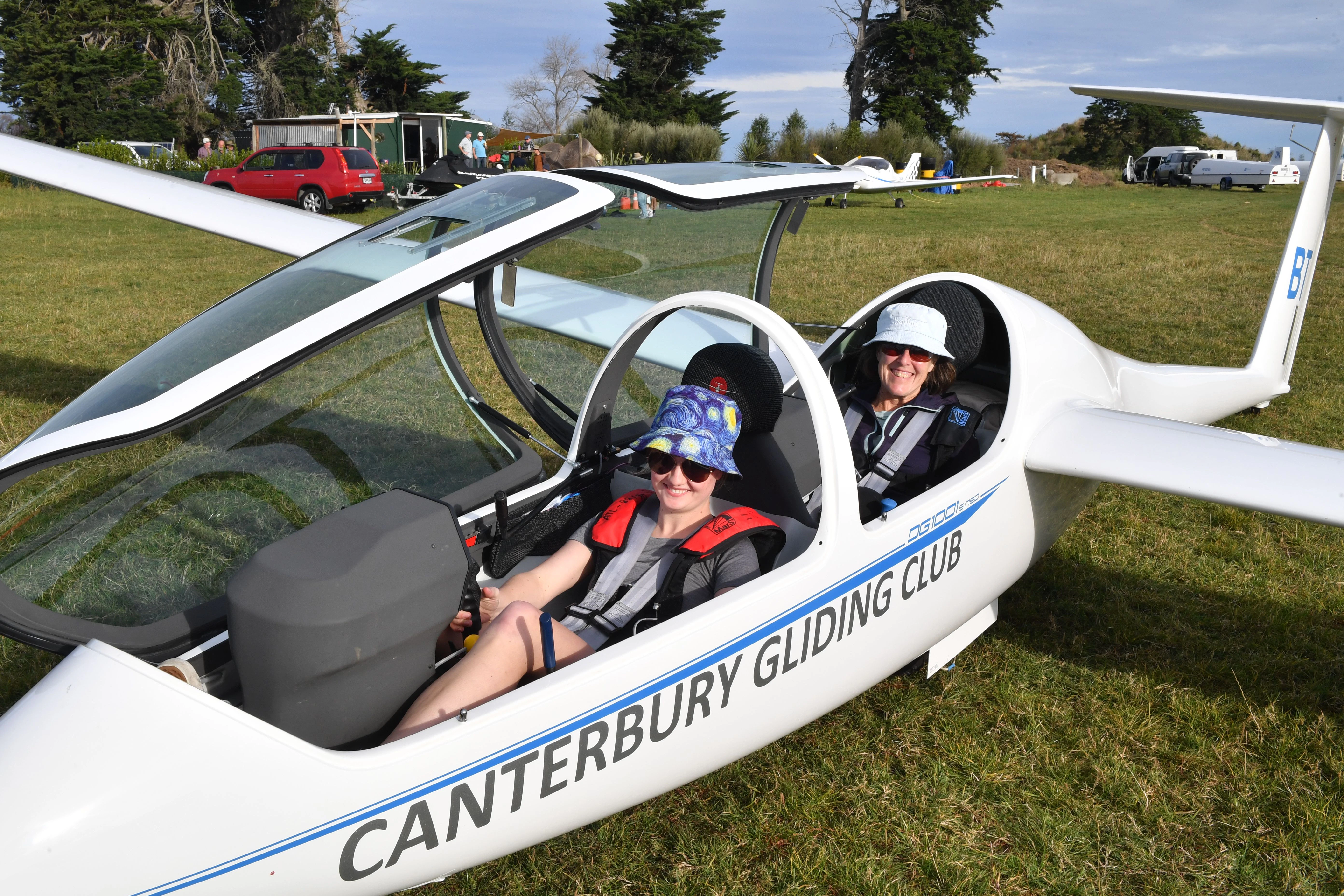
Alex has just achieved a single seat rating. Pictured here with instructor Jenny Wilkinson
Diamond Height Gain
Ben Sly Reports
Above the Kaimais: Climbing to FL251
The morning over Tauranga began bright and deceptively calm once a few rain showers had passed through. A hard, glassy blue stretched above the Kaimai Range, with little hint of what was waiting higher up. Twenty minutes after release, though, the first soft ripples of wave began to register on the vario. Soon after, a pale lens of cloud edged into view, a lenticular anchored just east of the ridge under a gentle southwesterly flow.
Flying the Schempp-Hirth Duo Discus (ZK-GRZ), I launched to 4,000 ft behind the towplane into what felt like distinctly average air. Establishing in the wave demanded patience. For close to half an hour the sky stayed stubbornly blue while the air quietly organised itself. Only as the wisps aligned and formed the first cleanly shaped lenticular sharpened did the wave reveal its full structure, a reminder that in gliding, persistence and patience often earn the best dividends. What begins as marginal turbulence can build into something far more powerful and defined.
From 1,500 ft I was already in contact with Bay Approach. Tauranga's controlled airspace begins low, so the entire climb required ongoing coordination. Working among Air New Zealand traffic in the high teens added complexity, but clear communication kept it smooth. It was a good example of how well gliders can operate in busy airspace when everyone stays ahead of the plan.
Once centred, the climb averaged 3 to 4 knots through the lower levels, with peaks touching close to 10 knots in places. It eased further through the mid-levels, and it would have been easy to conclude the day was fading. But above 15,000 ft the lift rebuilt to around 4 to 5 knots. The lift profile was not linear, and sitting through the soft patch eventually paid off.
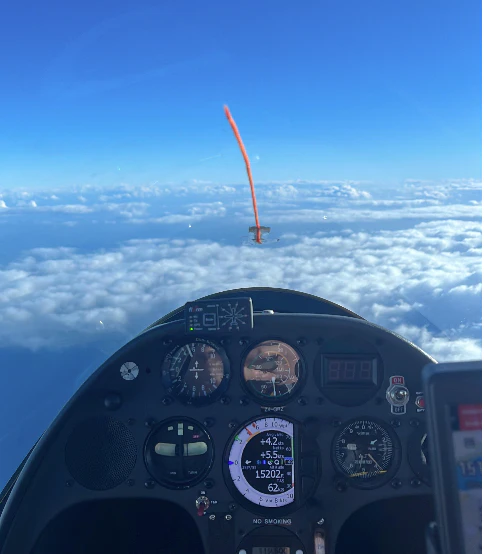
The air was perfectly laminar, the silky smoothness that is so unique to wave soaring. Smooth does not mean easy, though. Higher up, the workload climbed with it: oxygen management, radio calls, cold, and constant scanning all demanding attention at once.
From 17,000 ft I was running both a cannula and a constant-flow mask in parallel, verified by a pulse oximeter holding steady at 98%. The numbers were reassuring. Subjective feel at altitude can be unreliable, which is exactly why the objective data matters. A touch of sharpened alertness confirmed that the system was working.
Up, up and away. Ben on his way to 25,000'
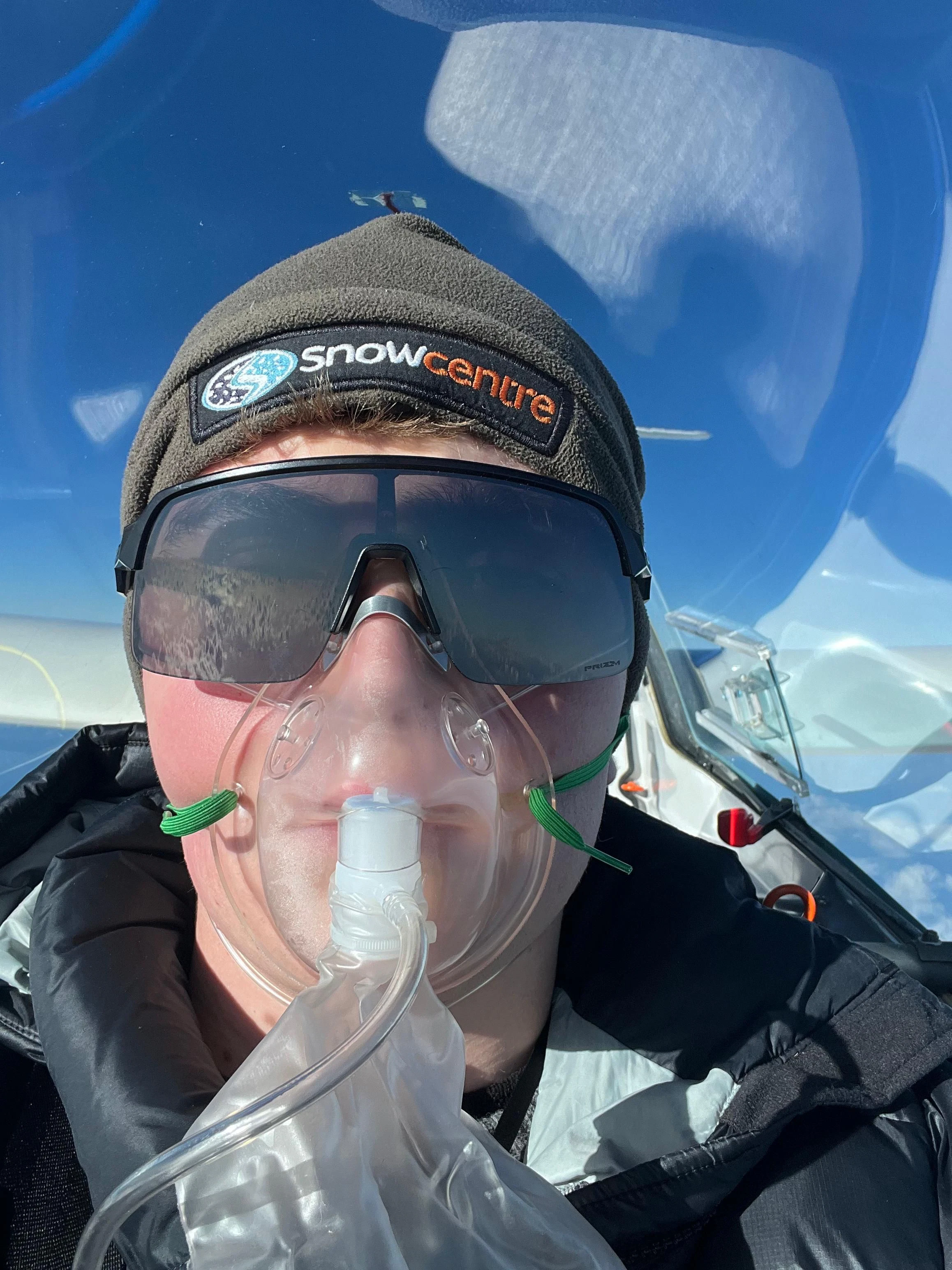
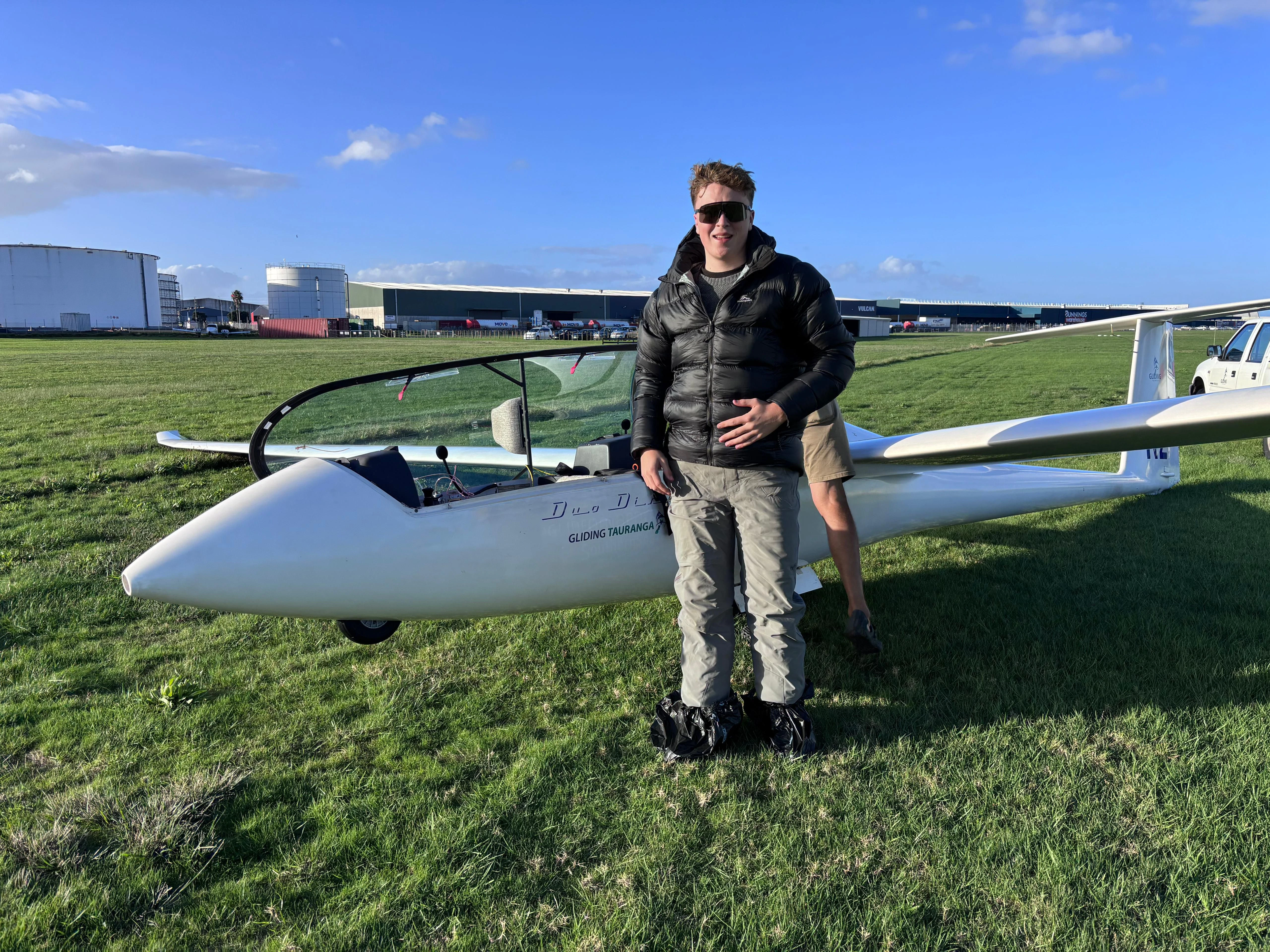
The climb continued past 23,000 ft, though the rate tapered off to 2 to 3 knots. The focus shifted from chasing height to staying within sensible limits. At minus 31°C, the cold became the primary constraint. Multiple layers helped, but extremities numbed quickly. Plastic bags over my shoes, a tip from Justin Wills, worked extremely well to combat the encroaching cold, and gloves followed shortly after. At these levels, the pilot becomes the limiting factor well before the glider does.
Ben with plastic bags on his feet to help ward off the cold.
The flight topped at FL251 (25,100 ft), confirmed on the transponder by Bay Approach. With lift softening and the cold biting harder, it felt right to stop there.
The descent was smooth, and the warmth crept back in steadily below the cloud base.
Flights like this are often measured by peak altitude, but the reality is subtler. Success came from dozens of quiet decisions: trusting a weak start, coordinating early, building redundancy into the oxygen system, verifying rather than assuming, and respecting the environment that made the flight possible. The day gave exactly what it should, a high, hard-earned climb above the Kaimais, and another lesson in patience, planning, and what becomes possible when everything aligns.
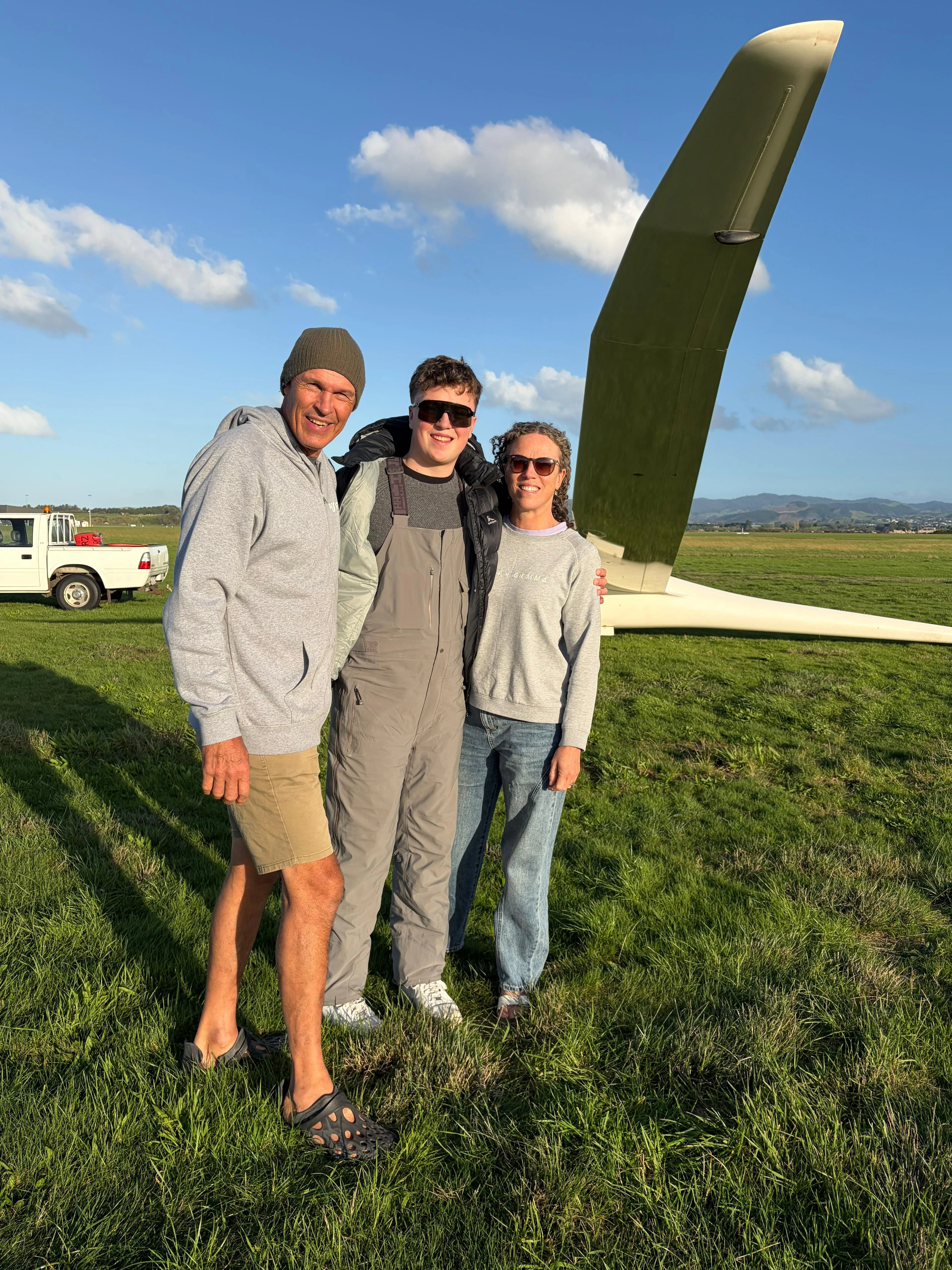
Ben with Tauranga instructor Ross Scholes and mum Abbey as support crew
Voices from the Past
A tale of preparation and persistence
On January 14th 1978 three kiwis, Bruce Drake, David Speight and Dick Georgeson achieved a world record distance to a goal flight of 1,254km. Taking off from David Speight's farm strip at Tower Peak Station near Lake Te Anau and landing around 12 hours later at the Te Araroa Airstrip, near the east cape of the North Island. All three pilots were flying Nimbus II gliders.
This world record flight was first conceived of and planned for by Dick Georgeson. It took him 14 years and 27 attempts to achieve this goal!
At this time, before the era of the mobile phone and computers, pilots and clubs communicated with each other using HF radio sets. Be it flight comms, weather information, competition results or all manner of discussion. HF reached right across the country making possible blow by blow accounts of record attempts as they happened.
Here is a recording of the HF radio conversations during the last part of this world record flight. Helen (Dick's wife) is located at Irishman Creek Station in the MacKenzie Basin with call sign ZLVQ. Dick is on final glide for the world record at 22,000' near Napier in his Nimbus II glider, Xray Xray. Max Stevens who made the recording is at his home in Raumati Beach, near Wellington. Max notes that the recording faithfully captures all the pops & whistles and other interferences typical of HF radio.
Automated Flight Recording
A new app coming soon.
Want to save considerable, time, effort and valuable volunteer resource at your club? Would automated flight recording linked to your clubs accounting software save your club time and money? Don't worry, help is on the way in the form of a new app run easily from your club members mobile phones. To find out more come to the GNZ AGM & Symposium in Christchurch in June where a presentation will reveal more details and answer questions from clubs. In the meantime below is a sneak peak video to wet your appetite.
GNZ AGM & SYMPOSIUM
6th & 7th June 2026, Distinction Hotel, Christchurch
GNZ AGM & SYMPOSIUM 2026
Sat 6th June 2026 - Sun 7th June 2026
Following the executives decision to move the AGM and Symposium weekend around the key centres to make it, on occasion, more accessible for local pilots, this years AGM will be held in the garden city of Christchurch. The AGM weekend is a fantastic opportunity to learn, celebrate achievements and connect with the view point of pilots from all around the country. Formal notice below.
This is formal notice in accordance with the Constitution that the Annual General Meeting
of Gliding New Zealand Incorporated will be held at the Distinction Christchurch hotel on
Saturday 6th June 2026, starting at 10:00 am.
This will be followed by a symposium programme to 5:00 pm, then a cocktail party with
guest speaker and the annual award presentations.
Final programme details will be announced closer to the event. The usual Annual Report
booklet will be published on the web site by 16th May. Hard copies of the booklet will be
mailed shortly afterwards.
Sunday 7th - Contest Pilots’ Meeting Distinction Christchurch hotel 9:00 am – 12:00 pm.
Proposed Motions
Clubs should give notice of any proposed motions and other items of business to the
Executive Officer by email no later than Saturday 9th May.
Registration for AGM
Registrations for the AGM and symposium should be completed online at this link
https://forms.gle/jPcb49wGN54HrTpj8 concurrent with online payment of the $75.00 fee
per person (reduced to $20 for members under the age of 26). The registration fee covers
the cost of morning & afternoon teas and a contribution towards the venue hire and the
evening function. To enable catering to be confirmed to the hotel, registration should be
completed by 20th May.
Accommodation and Parking
A limited number of rooms have been reserved at the Distinction Christchurch hotel. Room
prices are $225 per room per night for Classic King (1 King bed), $245 per room per night for
Classic Twin (2 Queen beds), or $310 per room per night for Superior Twin (2 Queen
beds). Contact Paula Ruddick to book (vaughanandpaula@gmail.com) – you will need to
provide your credit card details as security. The hotel offers valet parking on-site for $15.00
per day (8 am to 5pm) but there are limited spaces. There is plenty of additional parking
around the hotel provided by external vendors.
Awards
Nominations are requested for the following trophies and awards:
ANGUS ROSE BOWL. Awarded annually in recognition of outstanding service to the
sport of gliding in New Zealand. Pilot achievements are not excluded but greateremphasis is placed on other aspects of the sport, as there are already trophies for flying
exploits.
FRIENDSHIP CUP. Awarded annually for outstanding contribution to the gliding
movement during the preceding year.
AIR NEW ZEALAND SOARING AWARD. Awarded annually to the pilot who has shown
the most significant improvement in their personal standard of competition or record
flying during the year.
Nominations must be received by email no later than Saturday 9th May to enable them to be
considered by the Executive Committee.
Executive Committee Nominations
At the last AGM, the four positions of President, Vice President and two Executive members
were filled, with one Executive member (Amy Smith) having a further year to run.
This AGM will be the second to be held under the new Constitution, which requires the
Executive to call for nominations at least 42 days before the AGM for any positions that are
to be vacated. The term of office is two years. Note that re-elections are limited to a
maximum of three consecutive terms of office.
Amy Smith’s term will be complete and, having served four consecutive terms, now wishes
to retire. Accordingly, nominations are now invited to fill one Executive position.
Nominations should be sent by email no later than Saturday 16th May. Notice of
nominations received will be given at least 7 days before the AGM.
Summary of Deadlines:
9th May
- Email proposed Motions and other items of business
- Email Award nominations
16th May
- Email nominations for Executive Committee
20th May
- AGM registration to confirm catering https://forms.gle/jPcb49wGN54HrTpj8
Email address for motions and nominations executive.officer@gliding.co.nz
Note: There will be no hard copy posting of this notice. However, the usual hard copy ‘Annual Report’ booklet will be mailed out to key people in late May, and it will also be available for download on the GNZ web site here https://gliding.co.nz/2026-agm-weekend/. (This web page will be updated from time to time as the weekend approaches.)
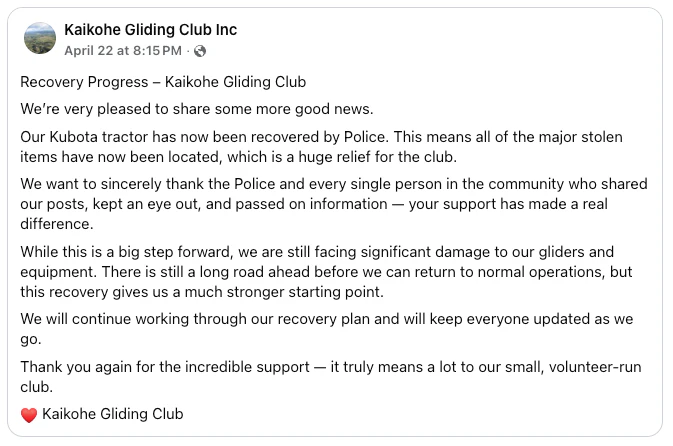
Better news from Kaikohe
Following last months destructive break in and theft of vital club equipment Kaikohe has some more positive news to report.
From around the clubs
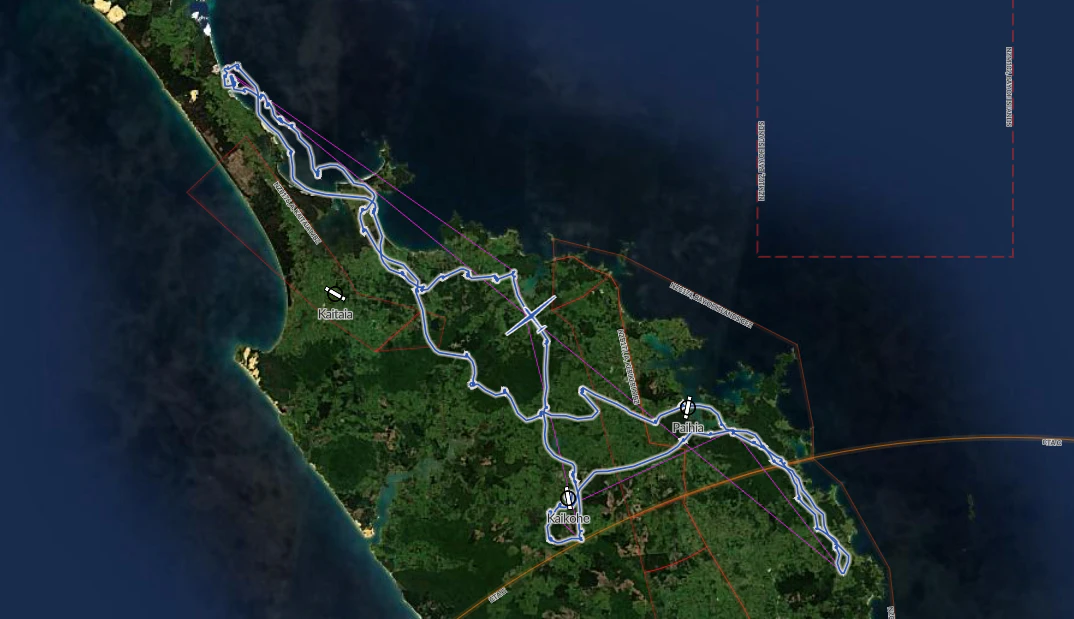
Julian Stevens in his DG500 showing Kaikohe is still flying with a nice 380km flight in April.
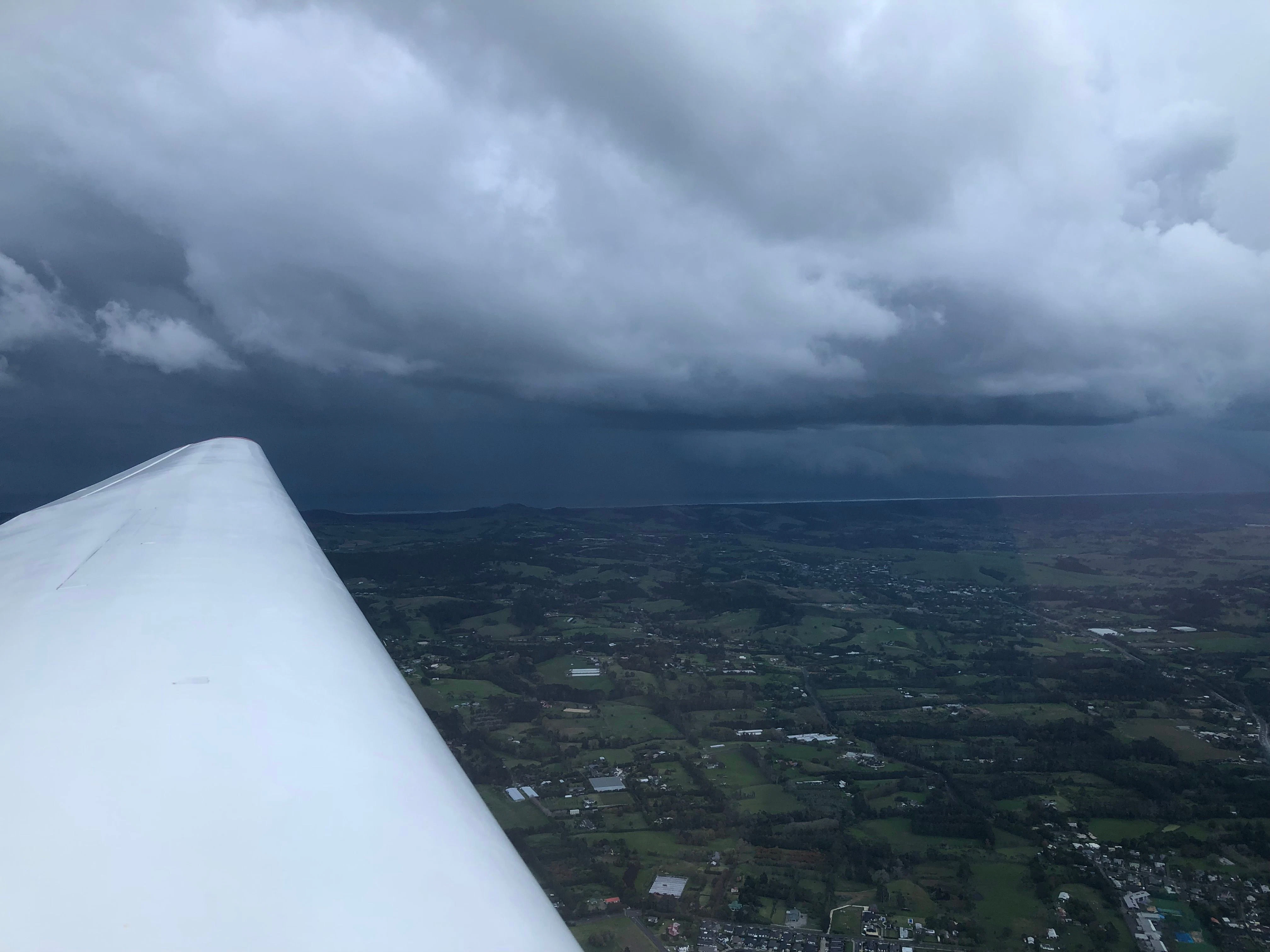
Thunderstorm inbound, just a few clicks west of Whenuapai.
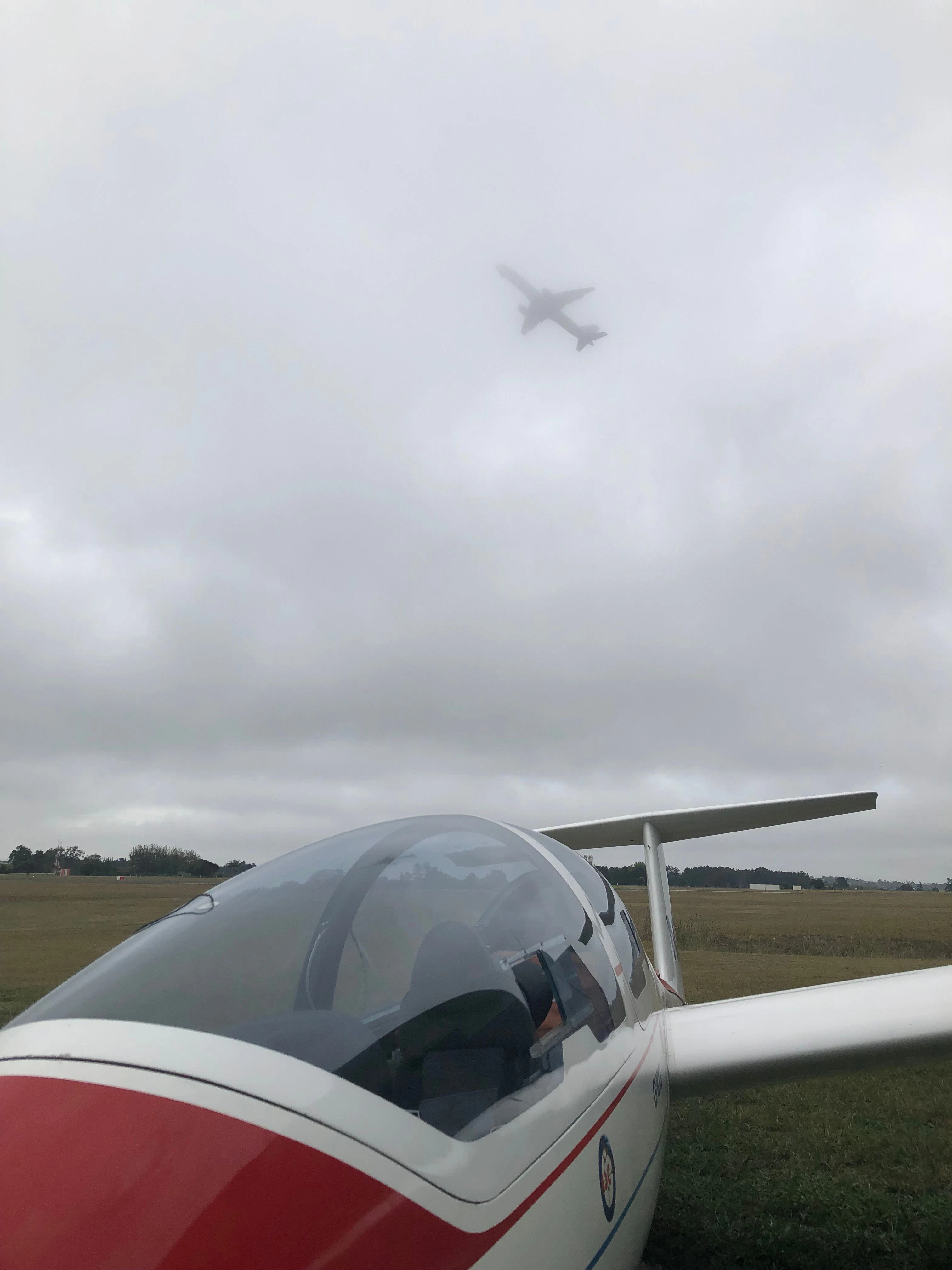
Airforce Boeing 757 disappears into a low cloud base after a max performance take-off while the gliders wait for the weather to improve.
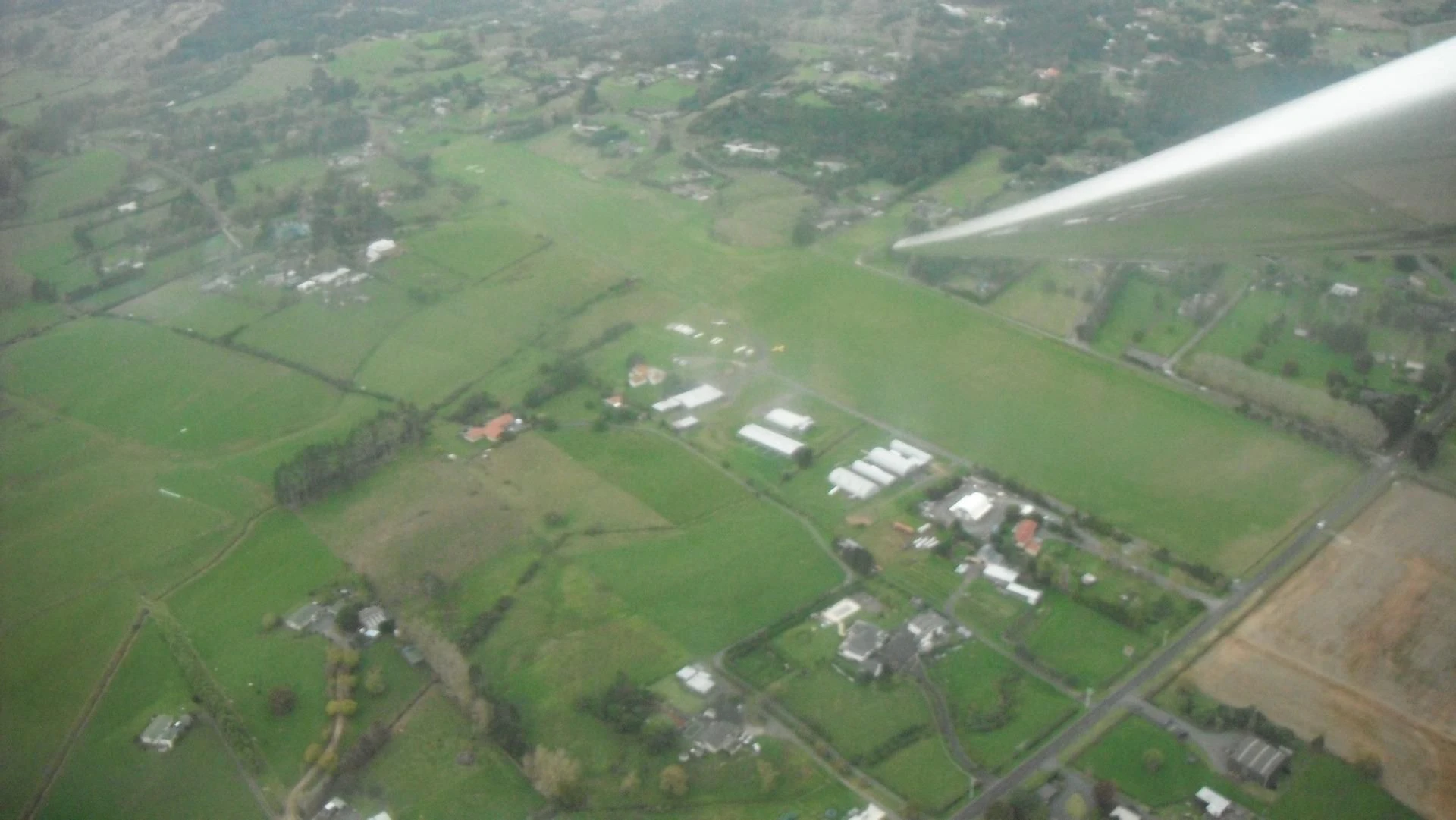
Angelie Madsen snaps a pic of Drury airfield on an average April day.
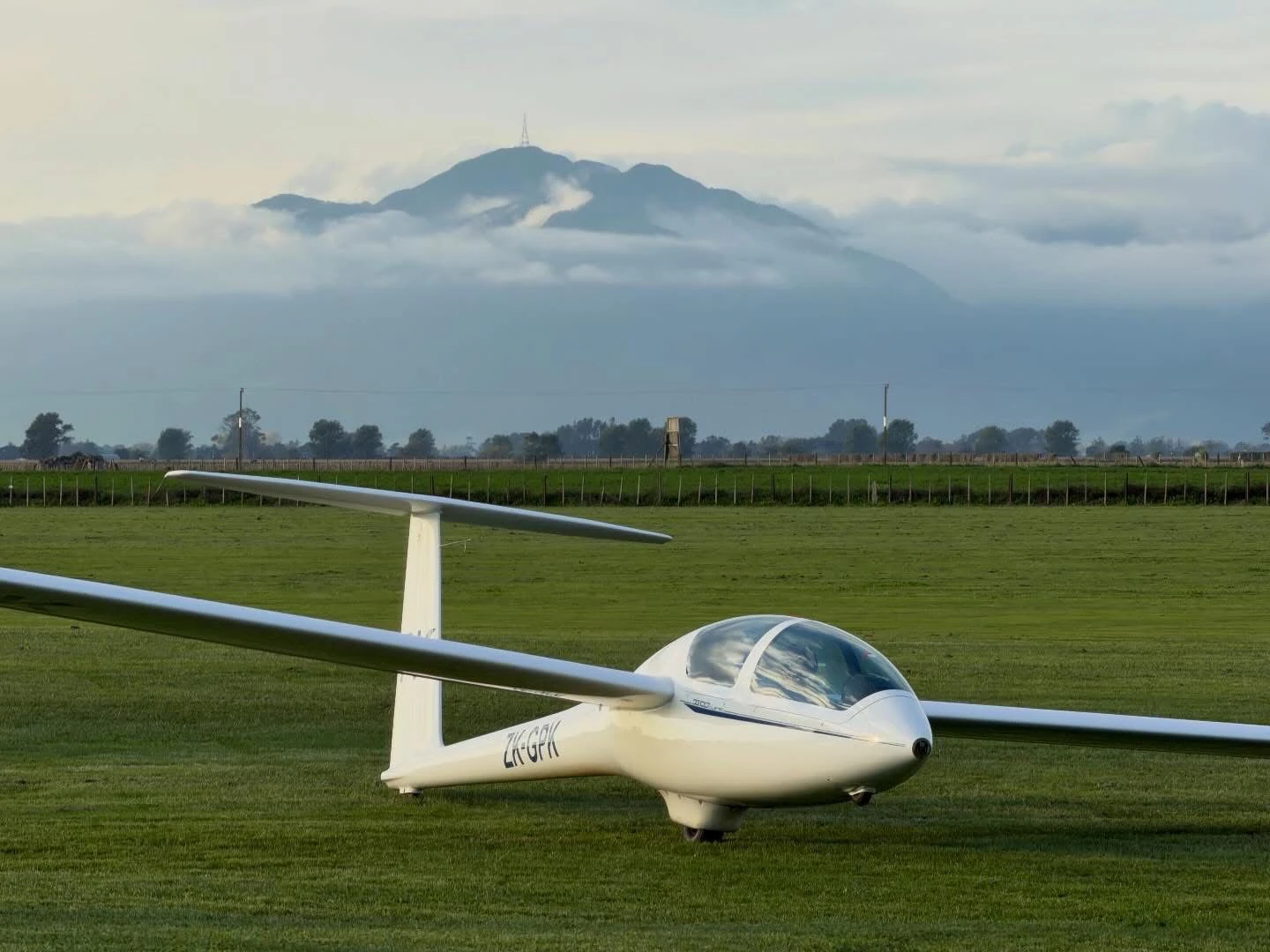
Piako's DG1000 with Mt Te Aroha in the background.
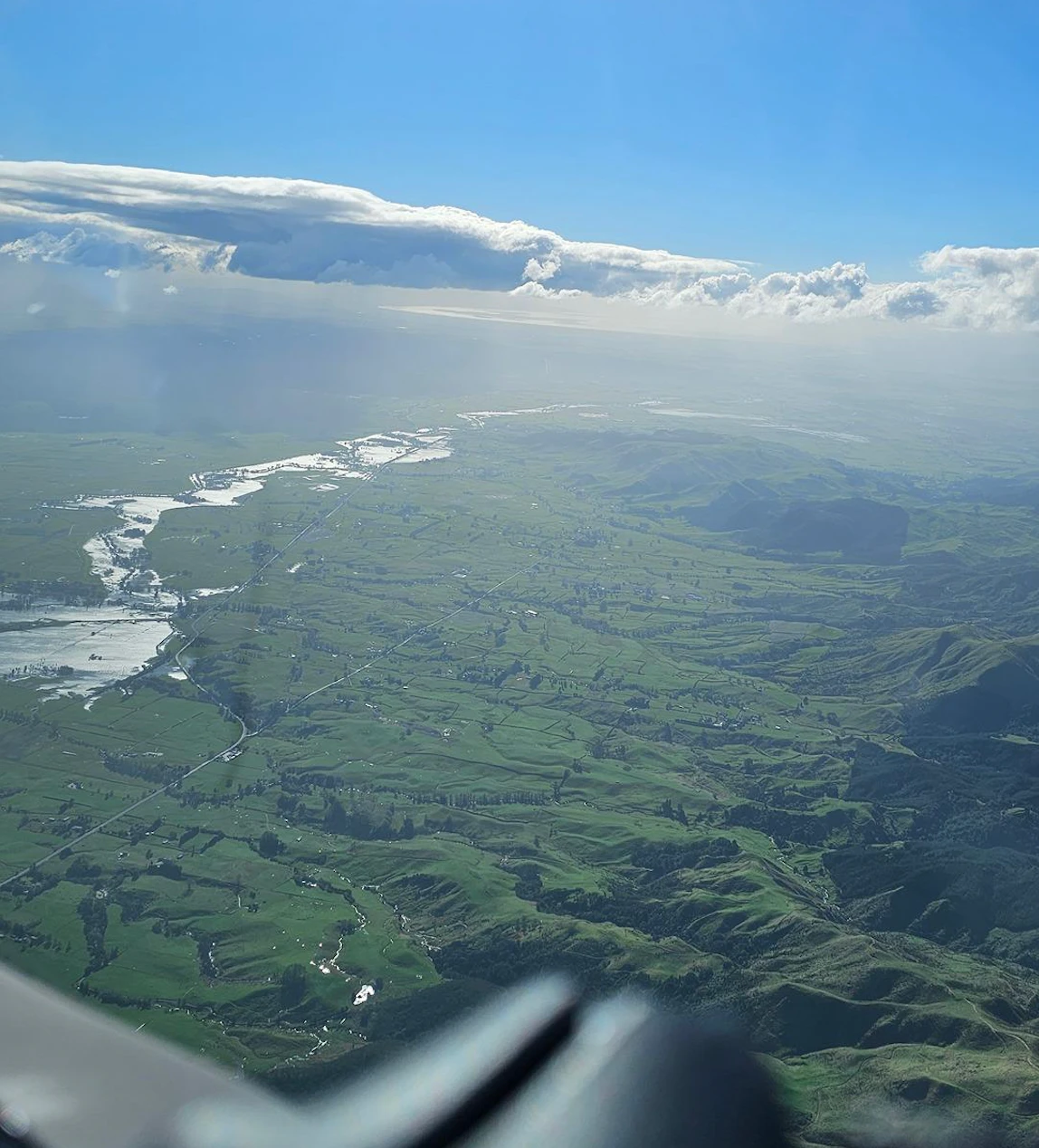
Sarel Venter from Piako observes the flooded Waihou River post cyclone Vaianu.
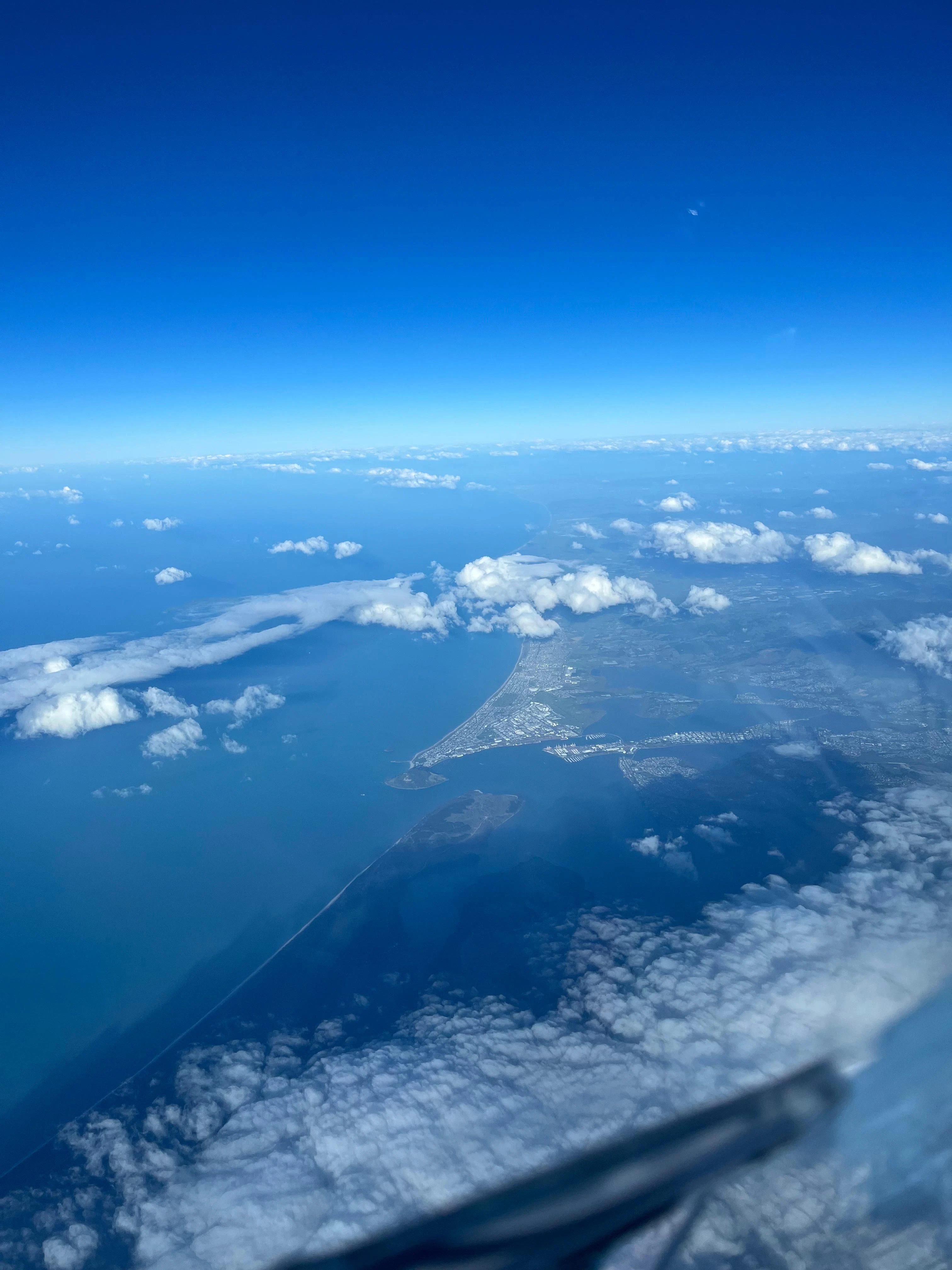
Ben Sly snaps a pic of Mt Maunganui as he returns to Tauranga from way up high.
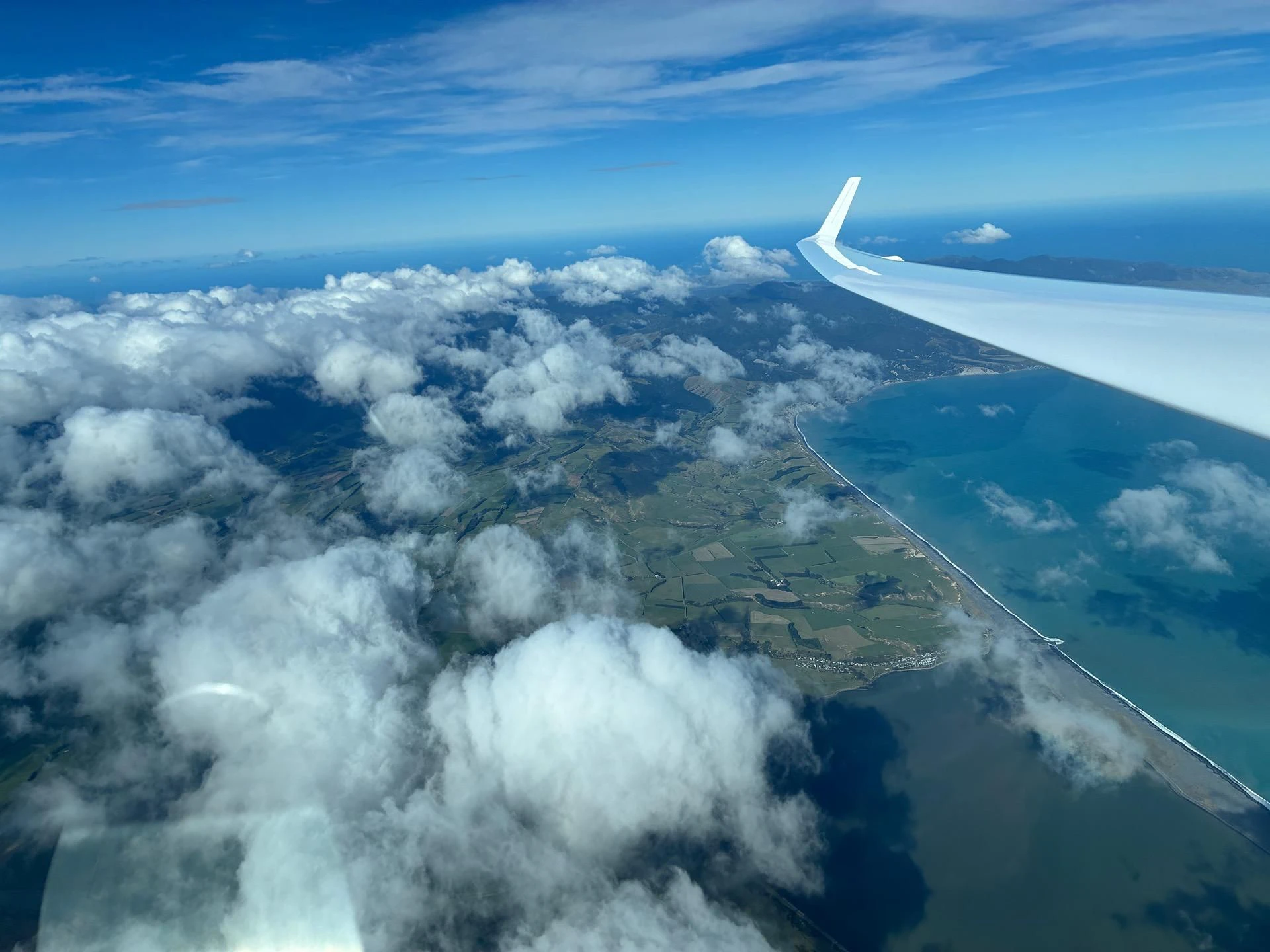
Martin Moncrieff looks across Palliser Bay to Cape Palliser on his way back to Papawai.
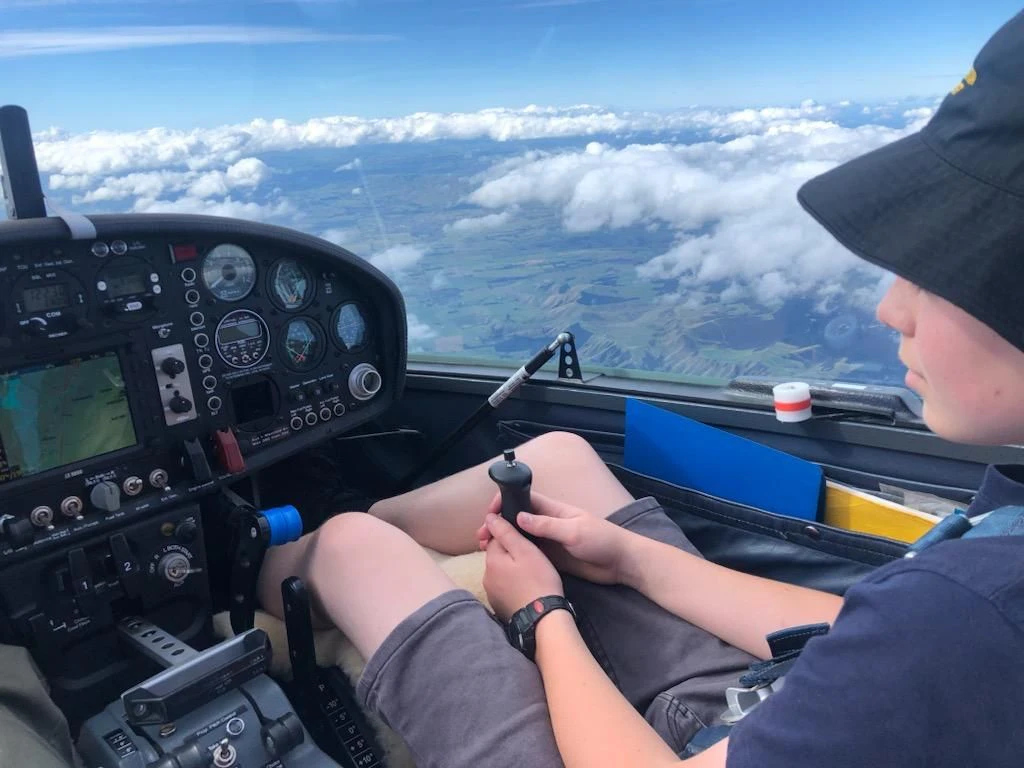
Martyn Cook takes young Oliver Henson for a wave flight in the Stemme S10
Contacting the wave is the pot of gold at the end of this Papawai rainbow.
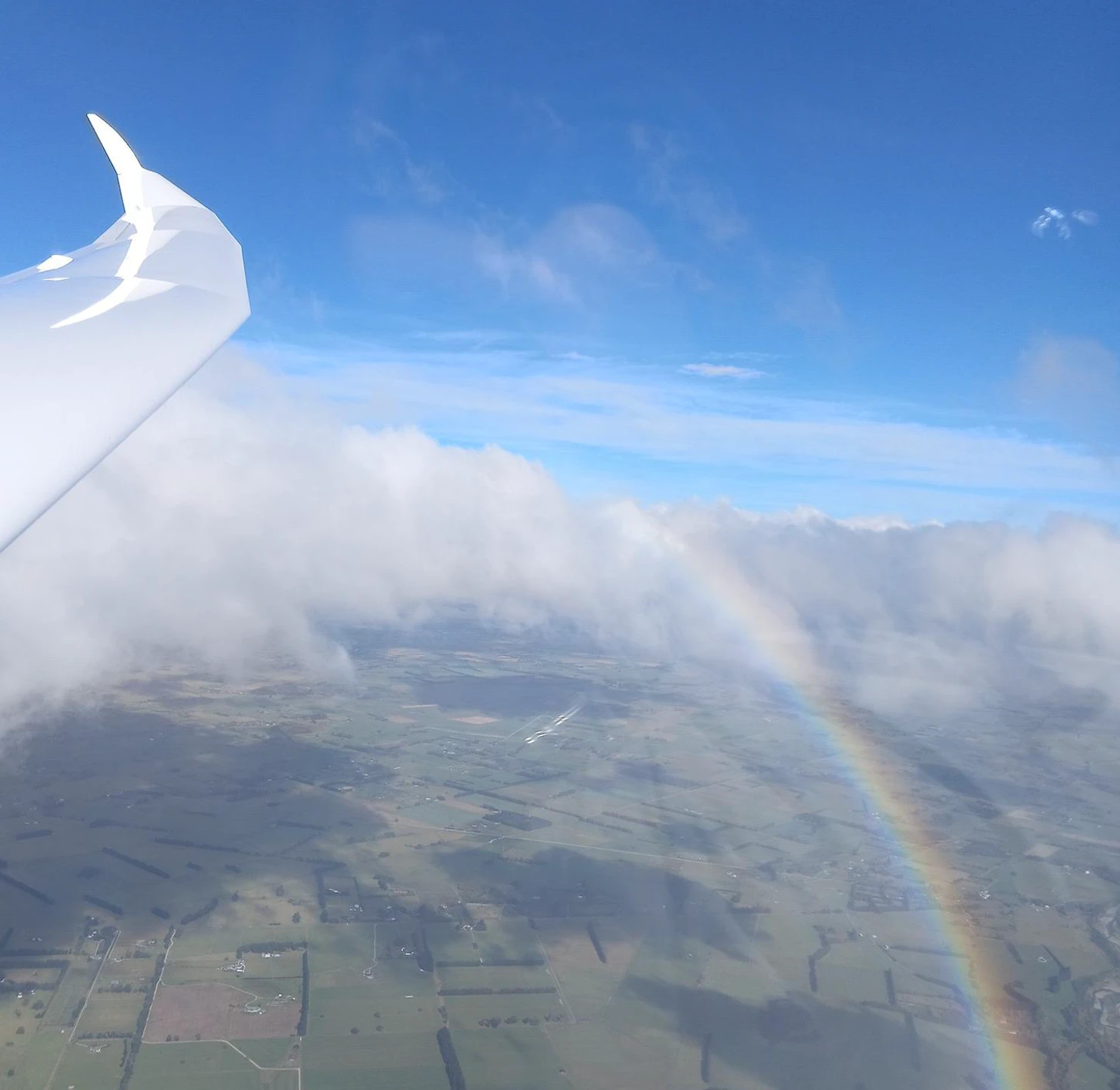
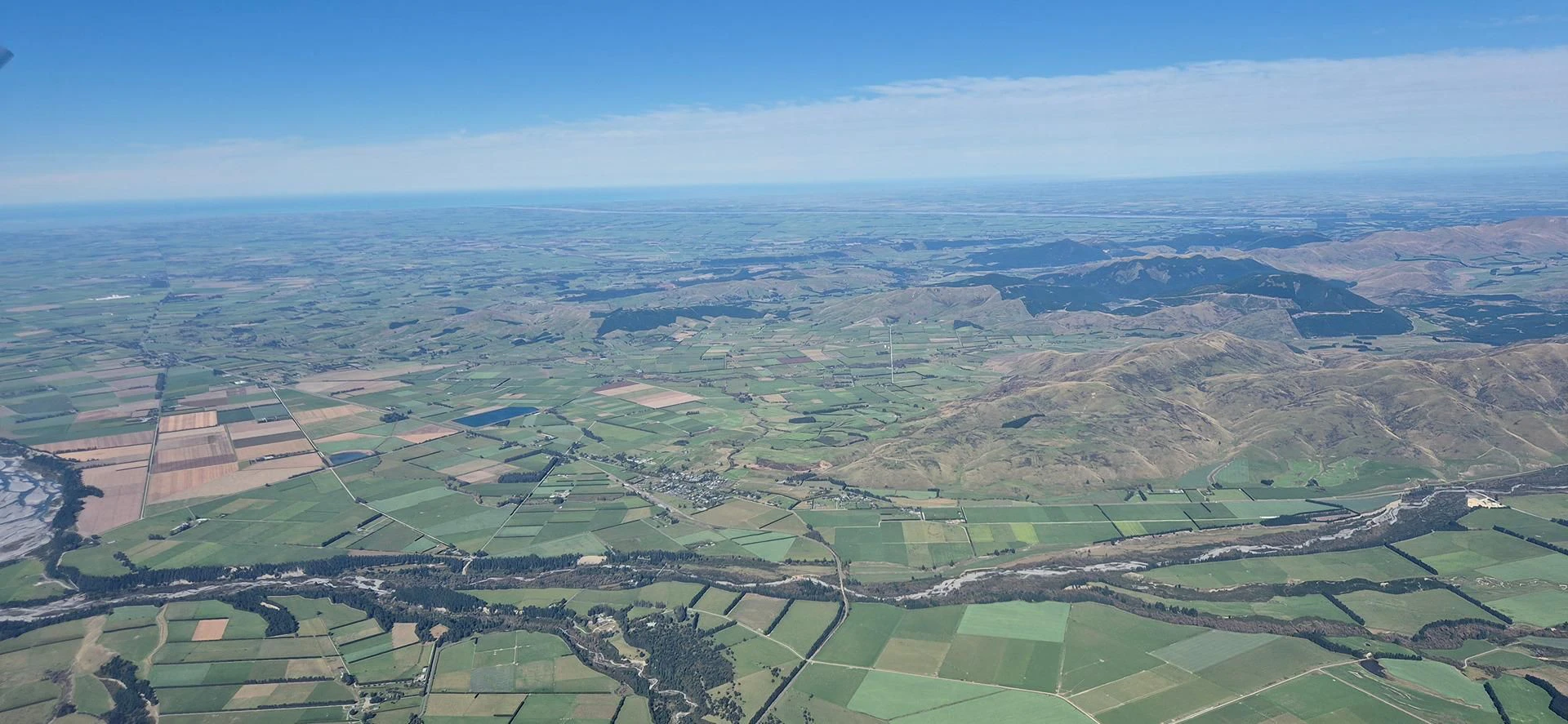
Neil Allison looks across the Canterbury Plains from Springfield
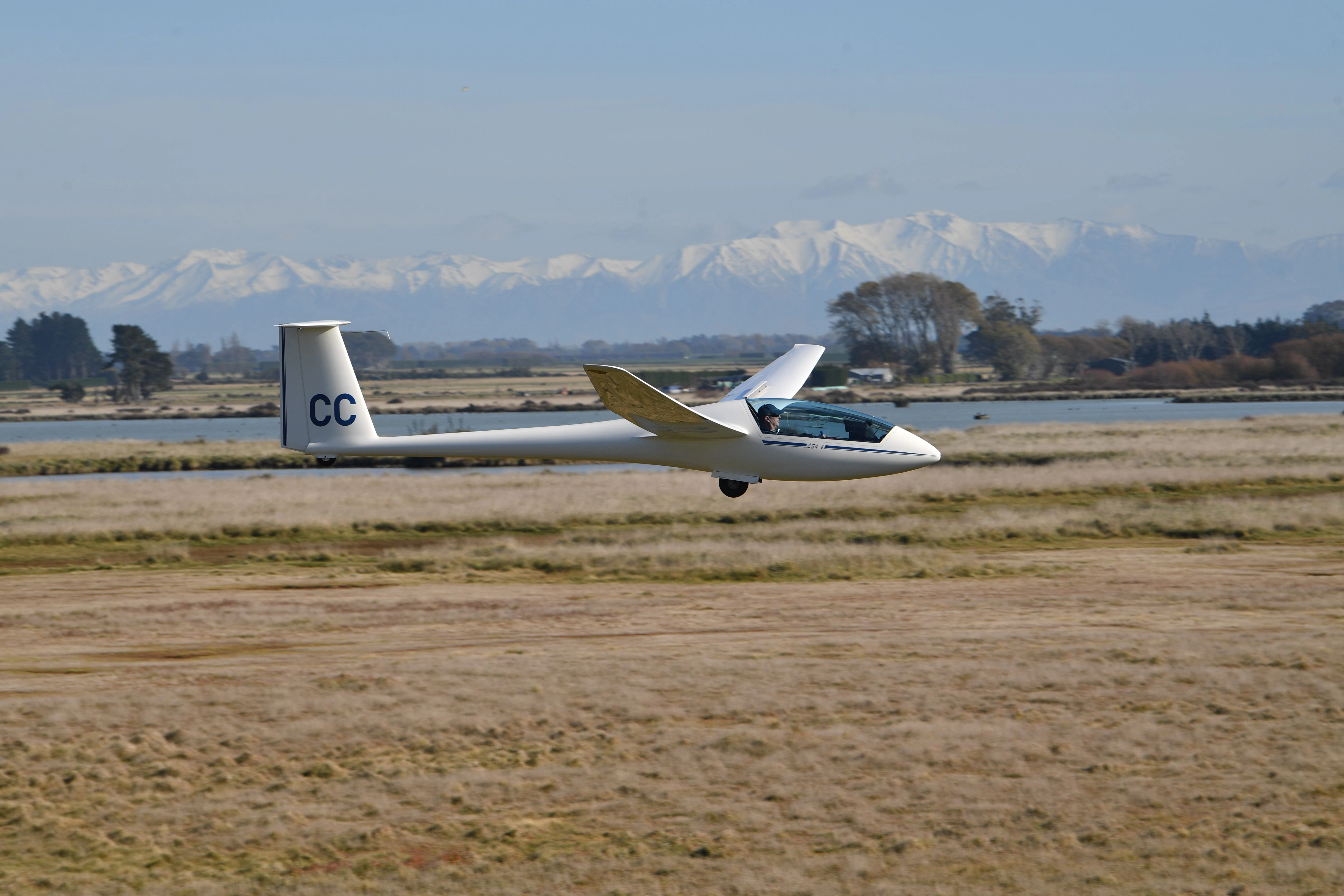
Landing at Selwyn Airpark beside Lake Ellesmere on a Canetrbury Club away trip.
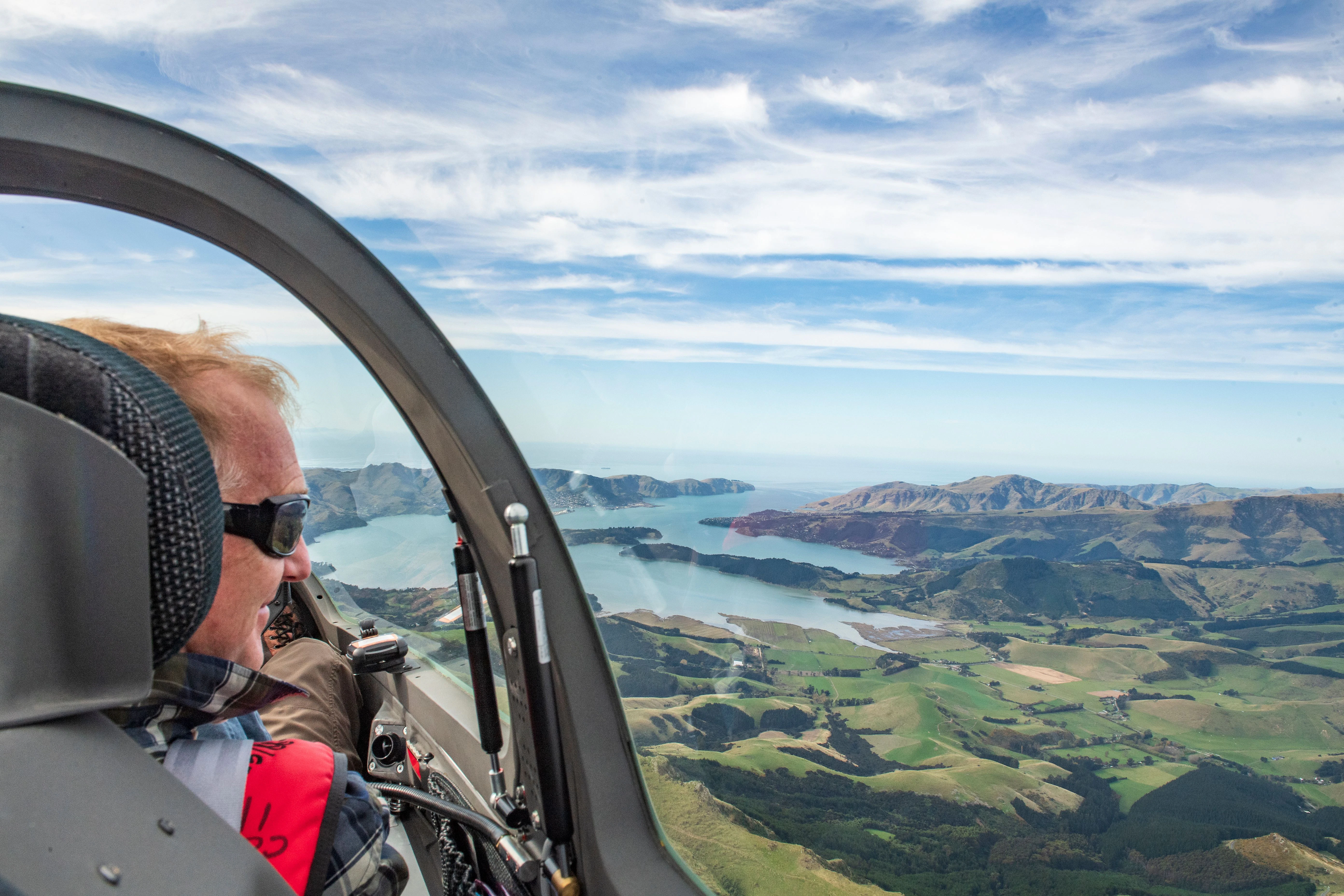
View of the Port Hills on a flight from Selwyn Airpark
RIP Kevin Bethwaite, missed immeasurably
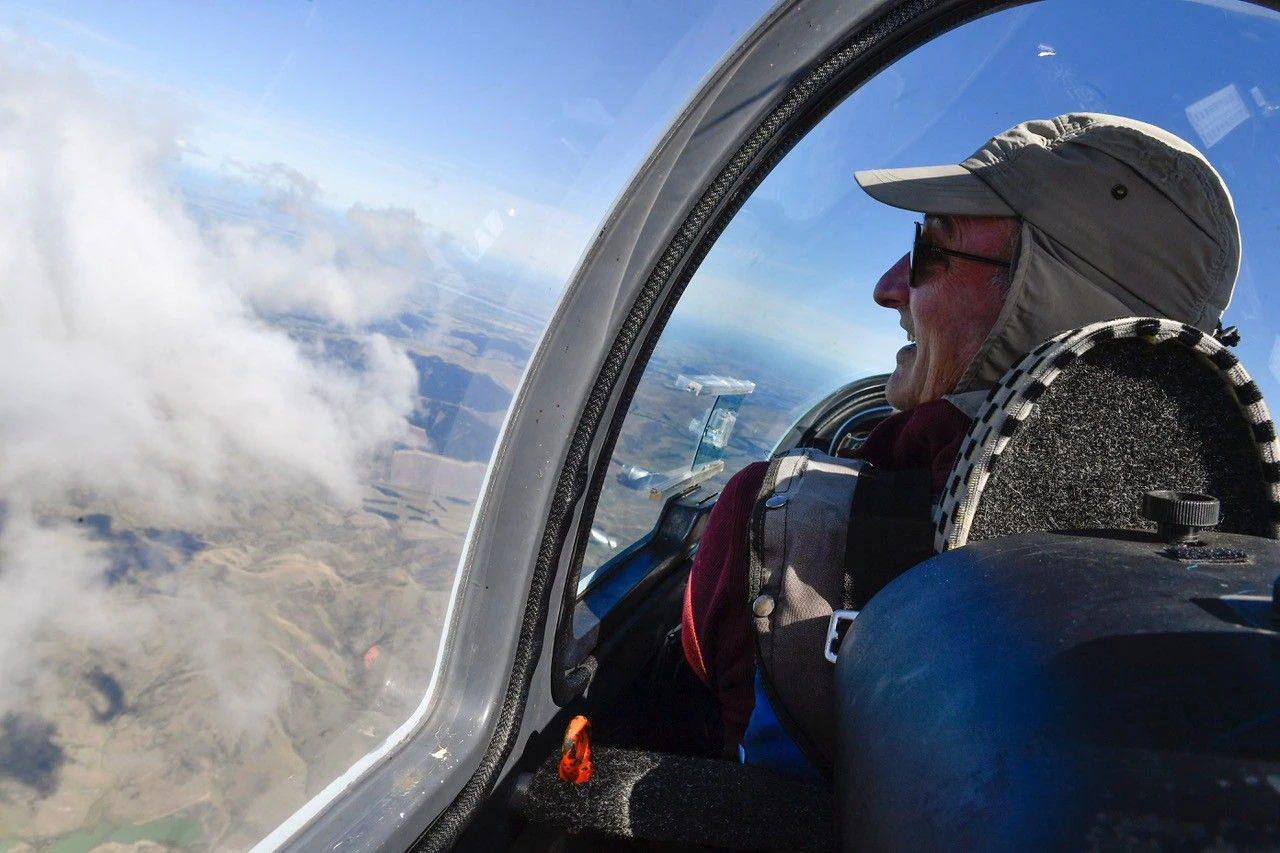
Felix Harper enjoys a 350km April wave flight from Omarama
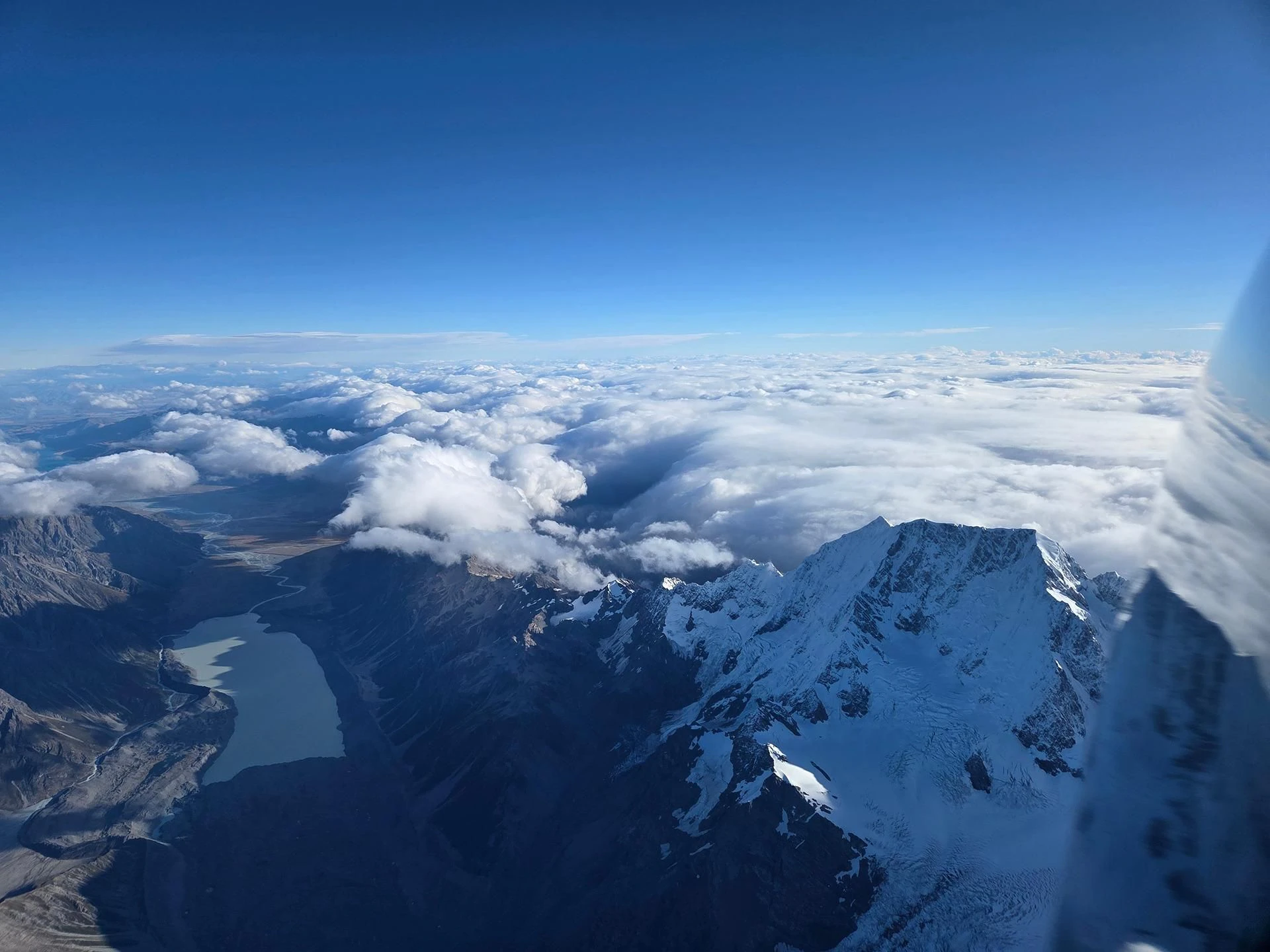
Chris Streat on a 350km April flight from Omarama
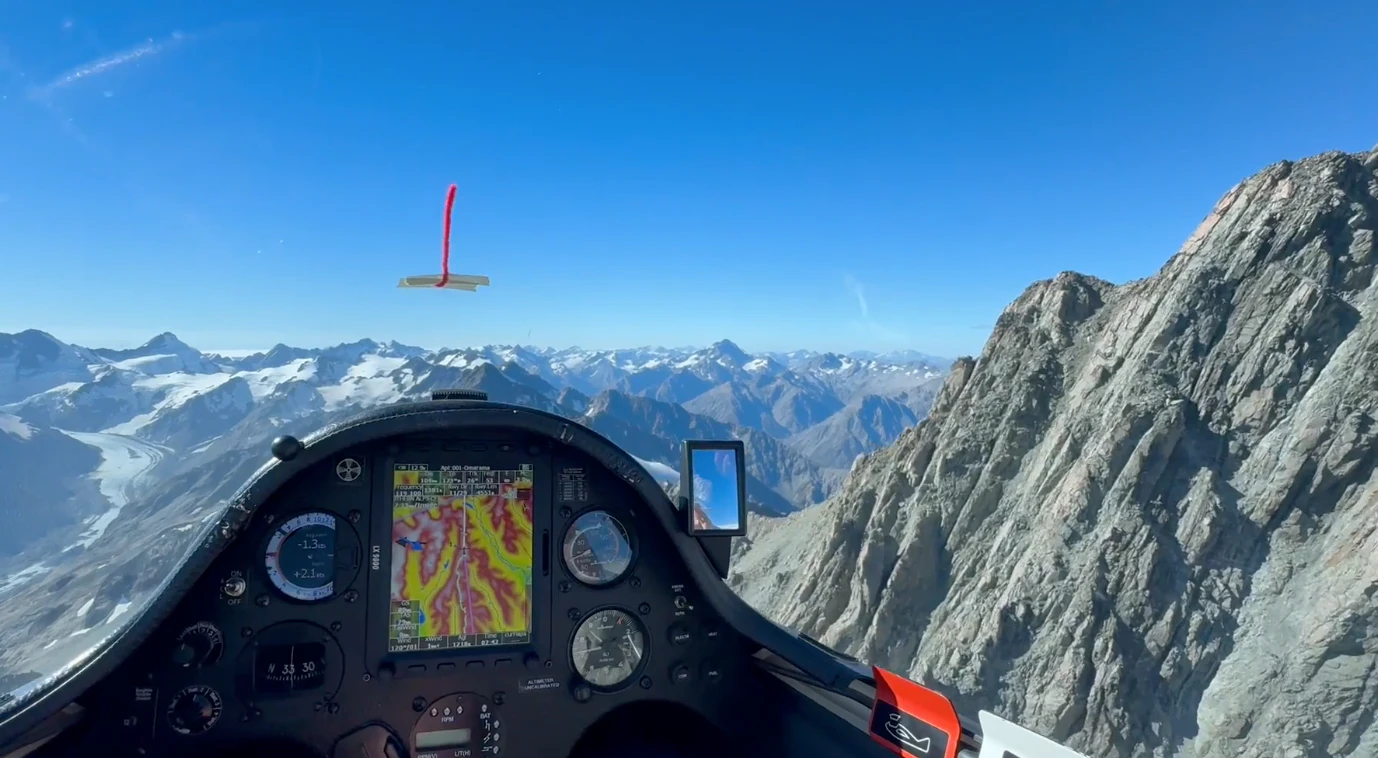
Lovely light in the 'place of light'.
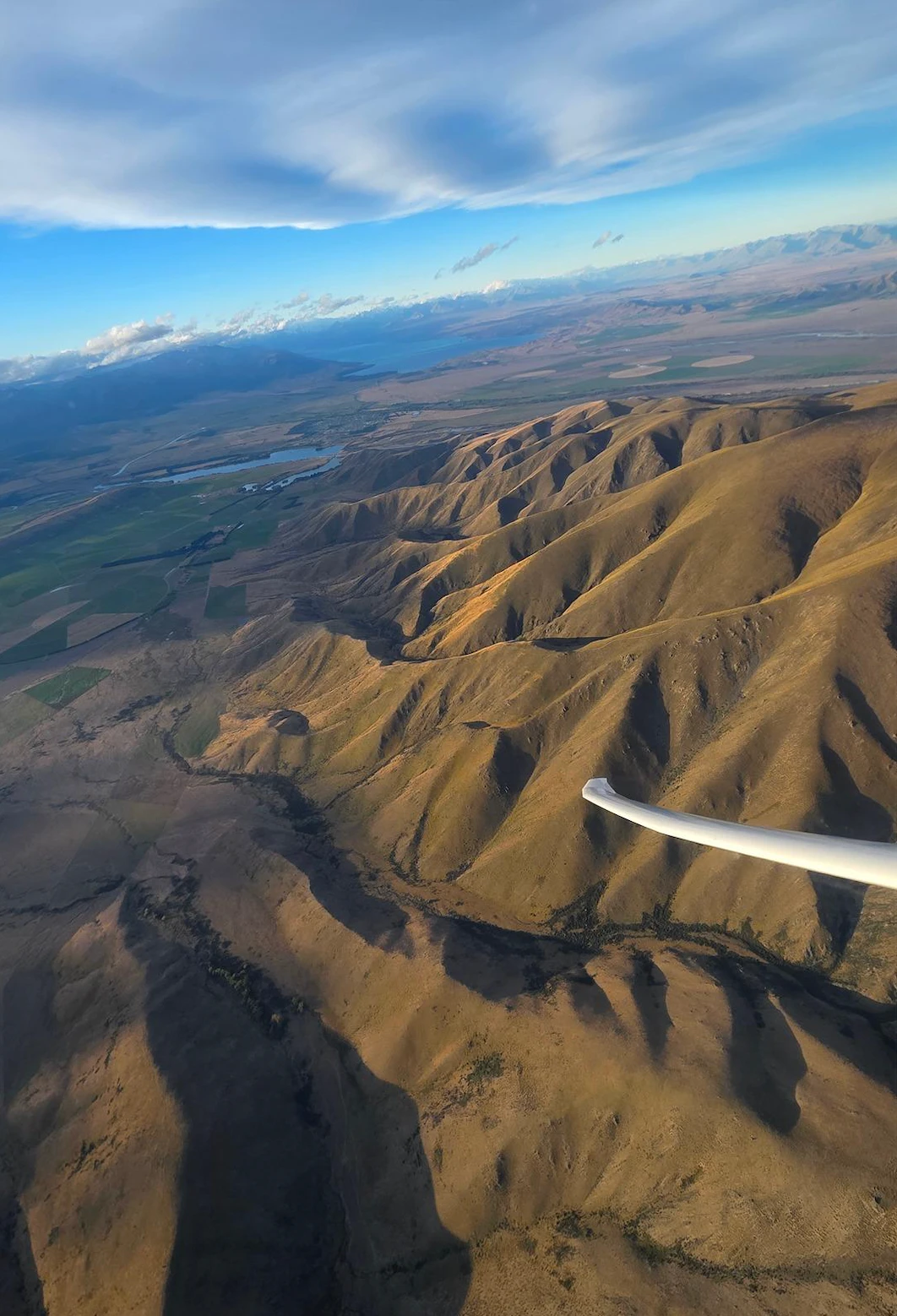
Angus Tapper from Glide Queenstown chasing his shadow
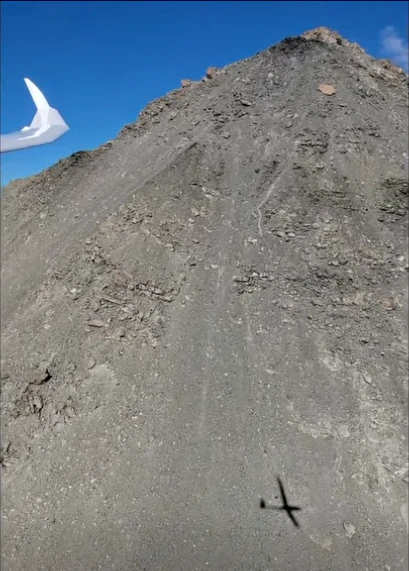
I have no words to caption this one...

Amy Smith, Felix Harper & Tuulianna Laukkanen did an amzing job creating and crewing the GNZ display at Warbirds over Wanaka
Membership
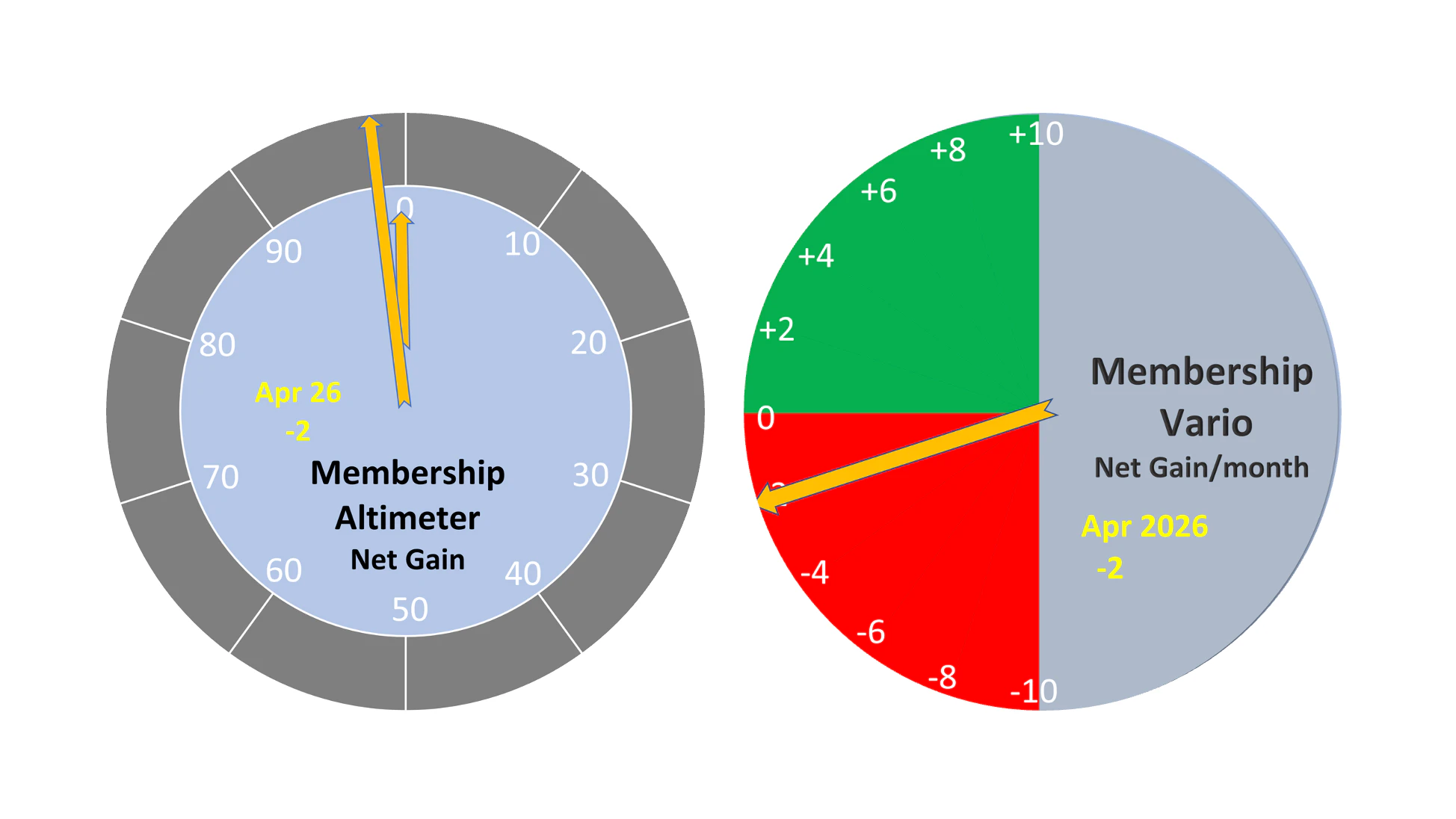
Membership Display Panel
And here we go again. Another new financial and therefore membership year for GNZ. Not the start we are after with a net -2 for the month but the year is long. With any luck the weather will hold steady long enough for those clubs whose fields get bogged to maintain flying well into the winter months. Let's all think about inviting a friend for a trial flight and see if we can gain new members over winter instead of losing members.
From the NAO
This Year’s Winter Maintenance.
Winter is on the way, time to plan your gliders winter maintenance requirements, I suggest contacting your engineer and making your arrangements early, don't be the one to leave it all until November when the soaring conditions arrives, if your aircraft happens to required extra maintenance or replacement items better to be dealing with that during the winter months rather than trying to sort it at the end of the year when things always get more difficult..
It is worth taking a longer look around our aircraft and pay a bit more attention to those small items that have been getting over looked and may have always "been that way"..
· That stick grip which is loose..
· That tail wheel which has been stiff for a while..
· That slow leak in the main wheel..
· That Mylar seal which is old and protruding into the airflow rather than providing a seal..
· Those cockpit placards which are so old and unreadable..
· That area of corrosion on the control rods..
· That area of cracking Gelcoat..
· Canopy latches which are too hard/too soft to operate..
Make a list with your Engineer to ensure items get seen to correctly.
A few items where your glider may require attention this year.
Mylar Seals and Hinges:
Many of our gliders are covered with sealing tapes and Mylars seals, makes our surfaces smooth and pretty. But difficult to access hinges which should be inspected and lubricated annually, pretty easy to skip it and do it next year..
As pilots you may not know this is slowly taking place, un-lubricated hinges will make the control forces heavier over time, you may not even notice over a long period of time.
I suspect there will be a number of aircraft around which will be suffering from this problem.
Control Cables:
Pay particular attention to the control cables, rudder and tow release cables etc, some of these can be difficult to inspect. Some aircraft will have their tow release cables operated several thousand times a year..
Pilot Harness set:
Anyone ever removed their harness set for cleaning? You may be surprised how dirty they are when soaked in a bucket of soapy water.
Require replacement or re- webbing every 12 years, this is specified in the GNZ TC 22 maintenance Schedule which your glider is maintained to, for gliders from approx 1980s onwards the Harness sets are a certified life item of 12 years, this is referred to within the gliders documentation, Maintenance Manual etc, for the older aircraft the documentation may not exist or the Maintenance Manuals may not be specific so the TC 22 Schedule confirms the 12 year life limit requirement.
It is quite likely that if a glider is still fitted with the older type harness set which has the sliding over locking lap pin (dating back to the 1970s) these will not be suitable for re-webbing and should have been replaced, if they haven't been they should be.
Wheel brakes:
Wheel brake not as effective last season? Report this to your engineer as it is not always possible to test the effectiveness of these in a workshop environment. Probably time for a service, fit new brake shoes or pads, the pads become hard and glazed with time making them less effective, change of the fluid in the hydraulic systems or replacements of the operating cables in the drum brake systems.
Instrument Panels:
Has you glider developed a bird’s nest of wiring behind the panel? Instrument panel looking a bit messy due to instrument changes, could be time for that tidy up?
Oxygen Systems:
Cylinders and regulators due for service or testing?
The below Airworthiness Circular has a good amount of information regarding this and use of the systems.
https://gliding.co.nz/wp-content/uploads/currentdoc/AC3-07.pdf
The following cylinder information is relevant to a lot of glider oxygen systems.
Cylinder type:
AL, (Aluminum cylinders), need hydro testing done once every 5 years and do not expire as long as they pass testing.
CFF-480, (Glass Fiber Filament Composite), need to be hydro tested once every 3 years and have a 15 year life limit.
CFFC, (Carbon Fiber Filament Composite), need hydro testing once every 5 years and have a 15 year life limit.
KF, (Kevlar Fiber Filament composite), need hydro testing once every 5 years and have a 15 year life limit.
On all cylinders, testing intervals start from the date of manufacture which is on the cylinder.
Weight and Balance:
Have you or your glider been slowly gaining weight? Your aircraft may not have been weighed for quite some time and if you’re looking for some soaring improvements next season a new W/B may be of benefit.
While confirming a cockpit weight range ensure to refer to the Max weight of the Non lifting parts (fuselage+equipment+tailplane+pilot) as the total allowable weight of this will in quite a few cases require the max allowable cockpit load to be reduced. This will have an effect on the older generation of gliders due to repairs/repainting/extra equipment installed, and is quite often overlooked.
Polishing:
Planning in polishing your glider? Stay away from the Silicon / Teflon based type polished, these can make any future painting / gel-coating works problematic, typical polishing creams are the way to go, check with your engineer if you are seeking any "how to" advice.
Trailering:
For those of you who leave your gliders in trailers over winter, it could be worthwhile putting a couple of containers of Damprid into your trailer to help reduce the amount of moisture covering all the surfaces for the next few months, one in the cockpit could be a good idea in those damp regions. That moisture can cause quite a bit of corrosion and mould to form.
For those of you who would like to know more about your responsibilities or be more involved in your glider maintenance talk with your engineer, there is also a useful Airworthiness Circular available on the GNZ website, link is below.
https://gliding.co.nz/wp-content/uploads/currentdoc/AC3-15.pdf
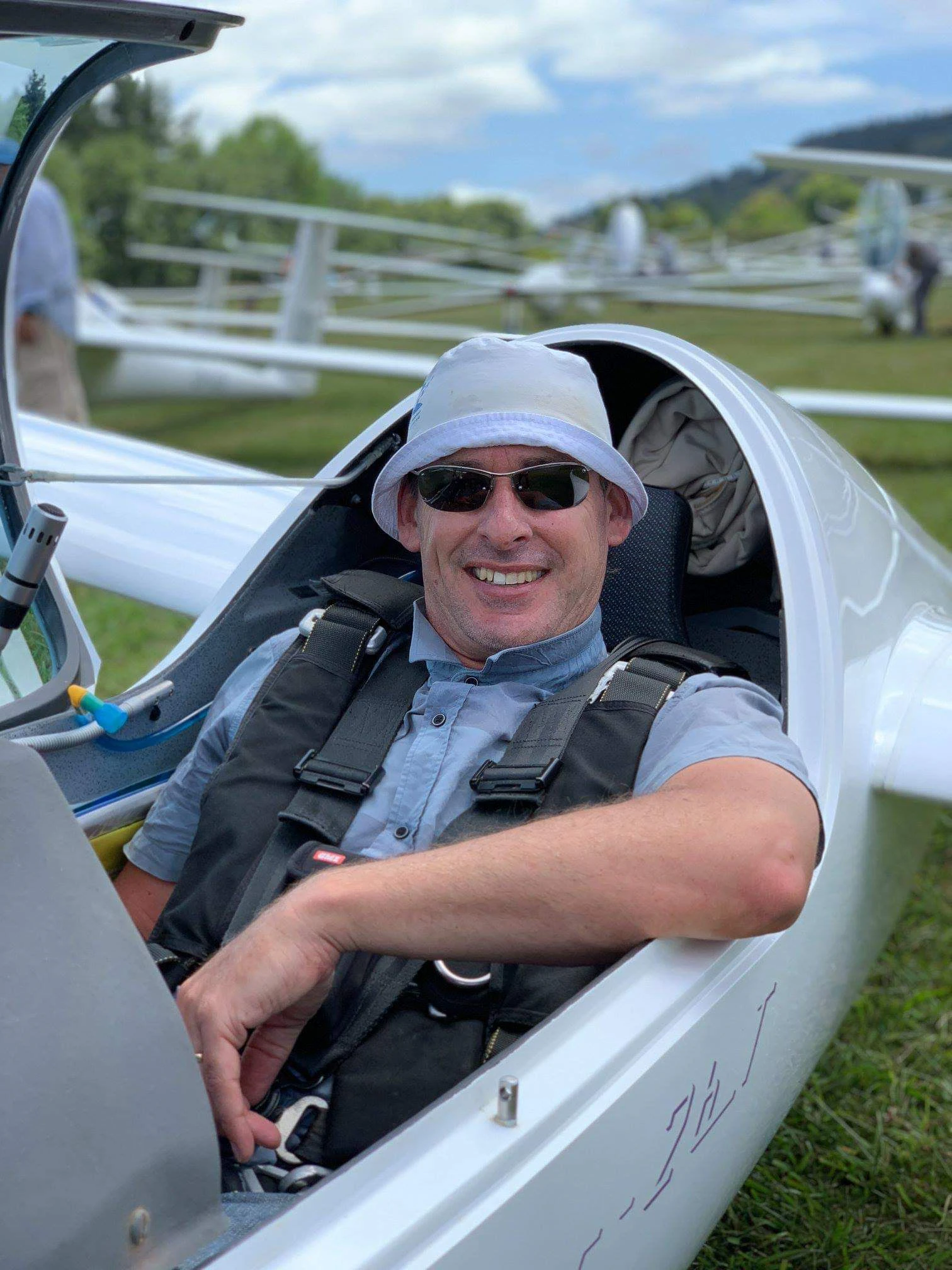
Jason Shields
National Airworthiness Officer
Club Welfare Officer
A nice intro from a clubs new CWO.
Does your club have a CWO yet?
Club welfare officer (CWO)
Gliding New Zealand, like many other organisations, has decided each of its clubs needs a
‘CWO’ (Club Welfare Officer).
“What on earth is that?” you ask.
There may be times when you do not feel you are being treated as you would like, or have
some other problem. Who do you share the problem with? Not the instructors: they are there
to teach you to fly, and are very busy during flying days. You may not know who are committee
members but not instructors. You may fear whoever you speak to will be of no help or even
laugh at you.
I am the new Club Welfare Officer, and my job is to listen to anyone who feels there is a
problem for them or with the club in general. I will listen, and take any action needed, with your
consent. I will also be keeping my ears and eyes open at Whenuapai and thus may ask you if
everything is all right with you.
I am a retired General Practitioner, and was Club Secretary for a while some years back, so am used to this sort of situation. If we do not meet up at the club, contact me initially by email if you have a concern and we can arrange to have a chat.
Cheers
Jonathan
Airspeed! Airspeed! Airspeed!
Ridge Flying
Very light wind onto the ridge forces you to be low and slow to maintain height. Are you ready for what's around the corner...
Here is the fourth in our series of safety videos created with support from the NZAF and the CAA.
Since the first gliding fatality in New Zealand in 1961, records indicate that approximately 70% of all our fatalities involve the pilot in command being for whatever reason, too low and too slow, leading to some kind of stall / spin, impact into terrain. These accidents have occurred after aerotow upsets, winch launch upsets, low level thermalling, ridge flying, outlandings, home field landings and final glides. It is likely, that in almost all of these cases if the pilot in command had maintained a safe speed near the ground then most of them would have lived to tell the tale.
Incident Reports
We are out of sequence this month for incident reports from the Ops Team.
You can access all back copies of the Ops Team Talking newsletters.
These have been placed on the Gliding NZ web site under News > Safety Bulletins A link to the GNZ accident & incident reporting form (OPS 10) can be found in the very top menu bar on the GNZ homepage, just to the right of the 'Classified Adverts'. You can now fill this form out on your phone at the airfield, so no excuses.

OPS 10 link: http://gliding.co.nz/wp-content/uploads/2019/06/OPS10v7f.pdf
In the case of an accident, asap please phone: 0508 ACCIDENT (0508 222 433)
NOTE: The OPS 10 form has been renamed and amended to include reporting of accidents as well as incidents – previously it was intended for incidents only.
(A CA005 still needs to be sent to CAA for accidents, but the OPS Team doesn’t require a copy of that now.) Consequential changes have been made to the MOAP and AC 2-08.
GNZ Classifieds
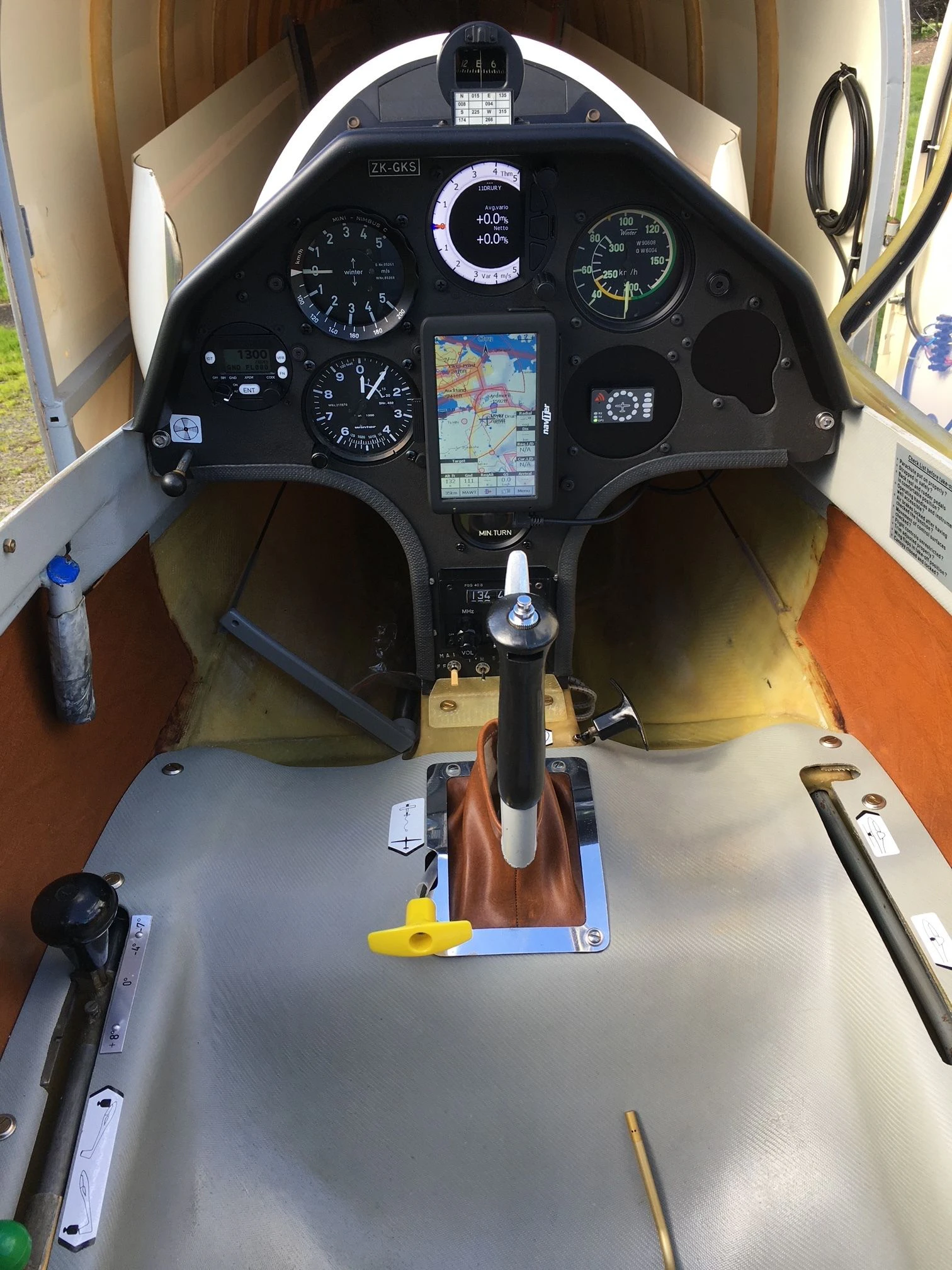
Mini Nimbus C - a very tidy, very affordable glider, comp ready
Meticulously cared for by owner since 1990. Very low time (1600 hours TT), no damage history.
Light carbon fibre wings (190L capacity), Trig TT22 transponder (ADS-B out), Flarm Power Mouse, Flarm LED display, LX-NAV S80 electronic vario/nav/final glide computer, Ilec extended length TE probe, panel-mounted Oudie 2, new Winter altimeter, Winter mechanical vario, turn & bank, twin LIFePO batteries with twin chargers, Mountain High Ox system, Dittel FSG40S radio.
Good tow-out gear, full set outdoor covers, indoor covers, tie-downs, water meter, wing stands.
Imported Karl Pheifer GRP body trailer in as-new condition – always garaged.
This glider has a roomy cockpit & everything for cross country soaring or competitions. Open to trade.
$35,000
Contact Information
Contact: Peter Wooley
Phone: 021 170 2009
For more gliders and other gliding stuff you can check out the GNZ classifieds at the link below.
https://gliding.co.nz/classifieds/
Thanks for reading
All contributions, pics, videos and opinions welcome
EMAIL: president@gliding.co.nz